Hypothesis vs. Thesis: Understanding the Differences and Their Relationship

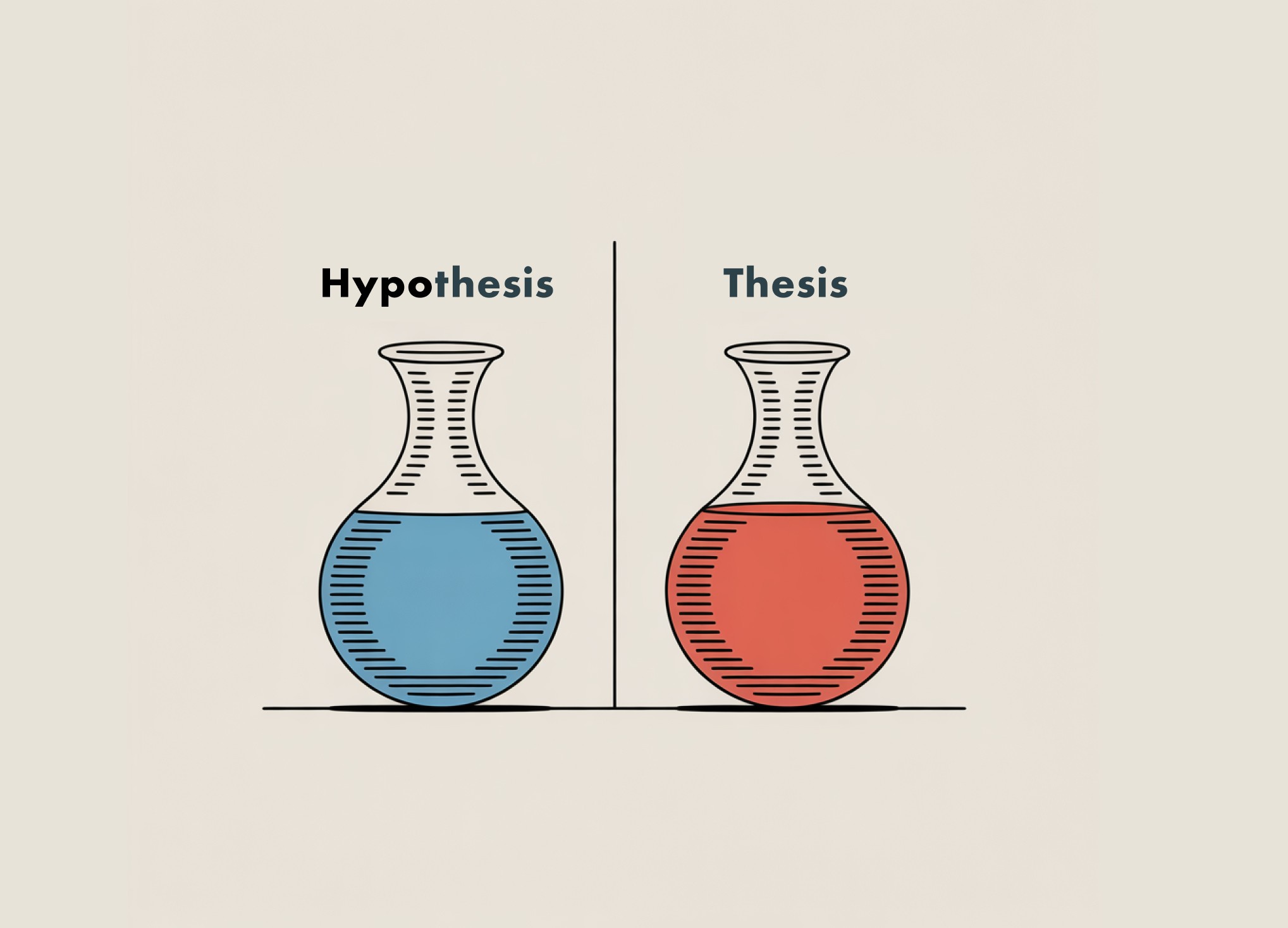
In academic research, confusion about hypothesis vs. thesis usually comes from the fact that the word thesis can mean two different things. A thesis is both a formal manuscript (the dissertation) and a central argument (the thesis statement). While a hypothesis serves as a preliminary, testable prediction used to direct an investigation, the thesis statement is the overarching claim supported by your final evidence.
Confusing these roles can weaken the structure of your project. This guide clarifies how a hypothesis and thesis statement interact across quantitative and qualitative frameworks, ensuring your research questions lead to a logically sound conclusion.
What is the Difference Between a Hypothesis and a Thesis?
The primary difference is that a hypothesis is a testable prediction formulated before research begins, while a thesis statement is the central argument or claim that your finished research supports.
Feature | Research Hypothesis | Thesis Statement |
Primary Purpose | To test a specific, falsifiable prediction. | To present the central argument or claim. |
Disciplinary Focus | Standard in STEM and Quantitative Social Sciences. | Essential across almost all academic disciplines. |
Logic Structure | Often an "If... then..." statement or a null hypothesis. | A concise, one-to-two sentence stance. |
Research Timing | Formulated before data collection begins. | Refined during the drafting and synthesis process. |
Defining the Hypothesis: A Testable Prediction
When distinguishing between a hypothesis and a thesis, the hypothesis is the part of the research process that makes a testable prediction. A research hypothesis states what you expect to find before the full analysis is complete. In academic research, it usually predicts a relationship between variables, a difference between groups, or the effect of an intervention. Unlike a thesis statement, which presents the paper’s central argument, a hypothesis gives you a claim that can be supported or rejected by the data.
Characteristics of a Strong Hypothesis
A strong research hypothesis should be specific, focused, and grounded in prior research or theory. Most importantly, it must be testable and falsifiable.
Testable: A testable hypothesis can be examined using observable or measurable data. You must be able to identify the variables involved, explain how they will be measured, and state what kind of evidence would count as support. In academic peer review, failing to be testable is a critical error.
For instance, tools like thesify will flag a manuscript if you fail to specify a single primary endpoint, timepoint, and exact statistical test for your hypothesis. Journals often expect this level of specificity so reviewers can assess the strength of the design and whether the reported analysis matches the stated hypothesis.
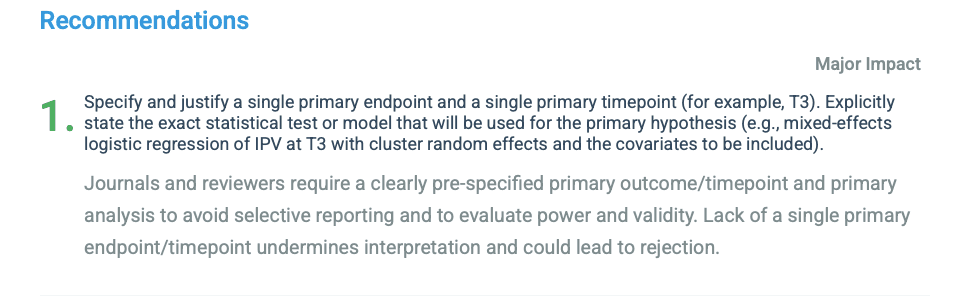
Academic tools like thesify flag hypotheses that lack specific endpoints or statistical models, as these omissions prevent true testability.
Falsifiable: A falsifiable hypothesis is one that could turn out to be empirically wrong. This is what makes it useful in academic research. A good hypothesis does not simply restate a broad idea or assume its own truth. Instead, it makes a claim that the findings could directly contradict.
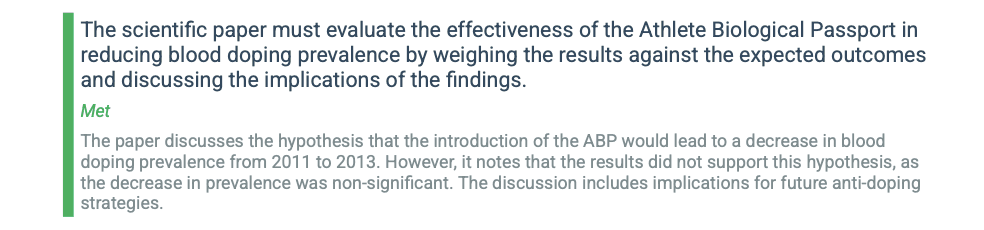
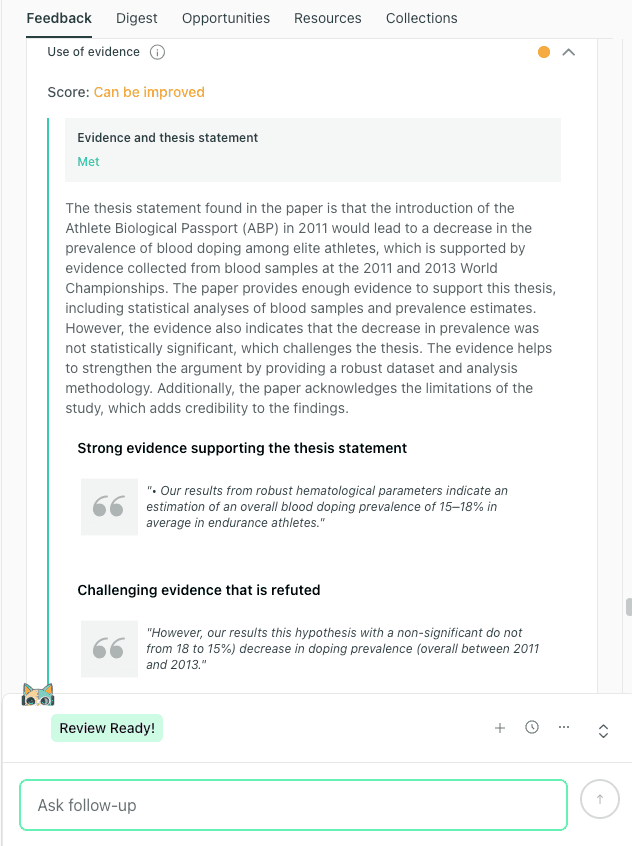
Because the hypothesis was clearly falsifiable, thesify shows that the non-significant results challenge the original prediction.
For example, look at the blood doping hypothesis above. When an academic paper tested the hypothesis that the introduction of the Athlete Biological Passport (ABP) would decrease blood doping prevalence between 2011 and 2013, the resulting data showed that the decrease was actually non-significant. Because the hypothesis was properly formulated and falsifiable, thesify correctly identified that the empirical evidence challenged the original prediction rather than supporting it.
That combination makes a hypothesis useful in research: it creates a clear standard against which the findings can be judged, even when the results do not support the original prediction.
For a deeper dive into formulating a hypothesis, see our guide on How to Write a Research Hypothesis: Steps & Examples.
In practice, a strong hypothesis usually does four things:
Identifies the population, condition, or phenomenon being studied.
Names the variables or outcomes being examined.
Predicts a relationship, difference, or effect.
Allows the results to either support or challenge the claim.
If a hypothesis is too vague to measure, too broad to test, or written in a way that no evidence could count against it, it is not yet strong enough for thesis research. This is especially true in empirical work, where a hypothesis should be tied to a clear endpoint, a defined timepoint, and an explicit analytical plan.

thesify feedback showing that a strong primary hypothesis needs a clearly specified endpoint, timepoint, and statistical analysis plan.
In the example above, thesify flags a common problem in weak hypotheses: the manuscript gestures toward a primary hypothesis, but does not specify a single primary endpoint, a single primary timepoint, or the exact statistical test or model that will evaluate it.
That feedback is useful because it shows what testability looks like in practice. A hypothesis becomes much stronger when it moves from a broad expectation to a clearly operationalized claim that can be evaluated rigorously.
Research Hypothesis Examples for Academic Research
The exact form of a research hypothesis depends on your methodology. Some hypotheses predict the effect of an intervention, some compare outcomes across groups, and others test whether a measurable pattern changes over time.
Here are three concrete examples for thesis research:
Social Media Use and Anxiety: Higher daily social media use will be associated with higher self-reported anxiety levels among university students.
Intervention Effect on Violence: Women assigned to an integrated support intervention will report lower recurrence of intimate partner violence and lower psychological distress at follow-up than women receiving usual care.
Change in Blood Doping Prevalence: The prevalence of blood doping among elite track and field athletes will be lower at the later international championship than at the earlier championship.
Each of these examples is specific, measurable, and clear about the expected direction of the finding. Just as importantly, each one is strictly falsifiable.
Does Every Thesis Project Need a Hypothesis?
Quick answer: No. A thesis project only needs a hypothesis when the study is designed to test a specific prediction. In quantitative, experimental, and intervention-based research, a hypothesis is usually expected. In qualitative, exploratory, and humanities-based projects, researchers rely on research questions and a central argument instead.
When a Thesis Project Usually Requires a Hypothesis
A hypothesis is likely required when a project tests whether one variable affects another, compares outcomes across groups, or evaluates the effect of an intervention. This is the standard in STEM, psychology, public health, economics, and quantitative social science research.
In these fields, a hypothesis helps define the logic of the study from the start. It clarifies what outcome is being tested, when it will be measured, and how the claim will be evaluated. A broad expectation on its own is rarely enough. In hypothesis-driven research, the prediction must be tied to a clearly defined testing framework. Without that, readers cannot tell whether the analysis actually evaluates the stated hypothesis.
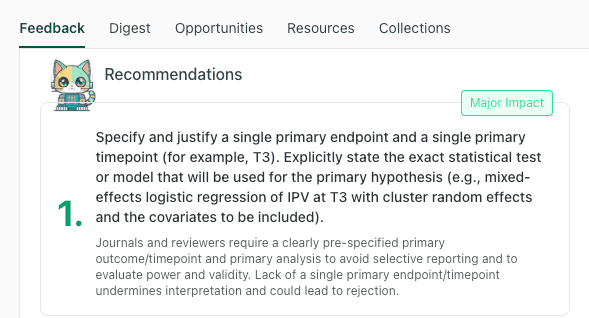
In hypothesis-driven quantitative research, thesify flags when a project does not clearly specify the primary endpoint, timepoint, and analysis plan needed to evaluate the main hypothesis.
A strong quantitative hypothesis is not enough as a broad prediction on its own. Without a specific analytical plan tied to your hypothesis, reviewers cannot judge whether your research design actually matches your aims. A hypothesis becomes much more defensible when it moves from a general prediction to a clearly operationalized claim that can be evaluated rigorously.
When a Thesis Project Usually Does Not Require a Hypothesis
Not every research project is built around prediction and statistical testing. In qualitative research, the goal is often to explore meanings, experiences, interpretations, or social processes rather than test a predefined causal claim. The same is true for humanities-based projects focused on textual analysis, historical interpretation, or theoretical critique.
In these contexts, forcing a formal hypothesis into the project weakens your framing. It can suggest a level of prediction and measurement that the method does not actually support.
Instead, these projects are structured around:
One or more central research questions.
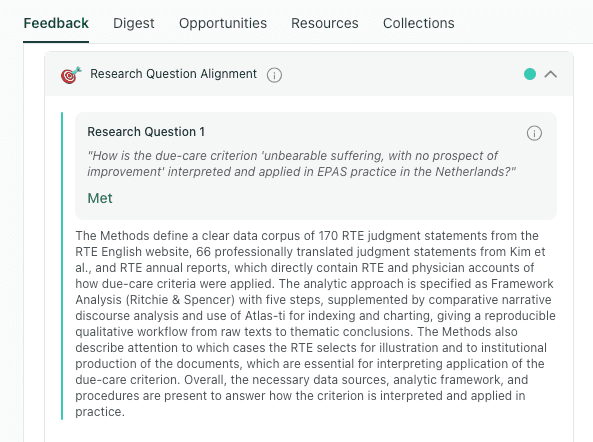
In qualitative research, you do not always need a hypothesis. Instead, tools like thesify evaluate how well your qualitative data corpus and analytical framework answer your overarching Research Question.
A clearly defined aim or objective.
A central interpretive or argumentative claim.
A qualitative analytical framework (e.g., thematic analysis or discourse analysis).
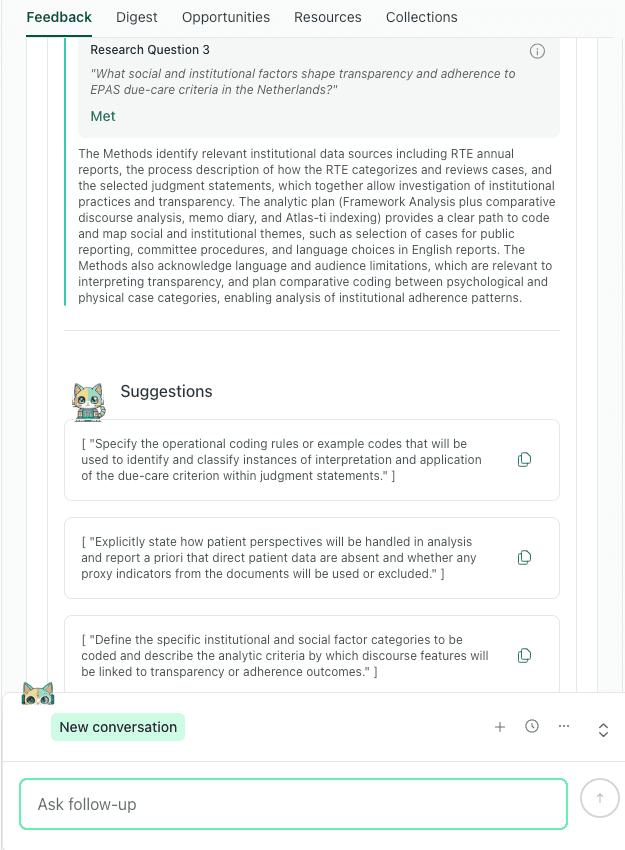
In qualitative and document-based research, thesify evaluates whether the research question can be answered clearly through the available sources, coding framework, and analytic categories.
The key question is whether your project is trying to test a measurable prediction or develop an interpretive argument.
Does Every Thesis Statement Need a Hypothesis?
Quick answer: No. A thesis statement does not need a hypothesis because the two serve entirely different functions. A hypothesis predicts what a study expects to find, while a thesis statement presents the final, central argument the paper defends.
Why a Thesis Statement and a Hypothesis Are Not the Same
A thesis statement and a hypothesis serve different purposes in a manuscript, so one does not automatically require the other.
Depending on your research design, your paper will likely feature:
A thesis statement without a hypothesis (common in the humanities, theoretical analyses, and literature reviews).
Both a thesis statement and a hypothesis (common in empirical research and standard in quantitative research).
This distinction matters. Avoid assuming that if you are asked to write a thesis statement, you must also invent a formal hypothesis. Including a hypothesis on research that does not require one, may incorrectly force a rigid empirical framework onto qualitative or argumentative work.
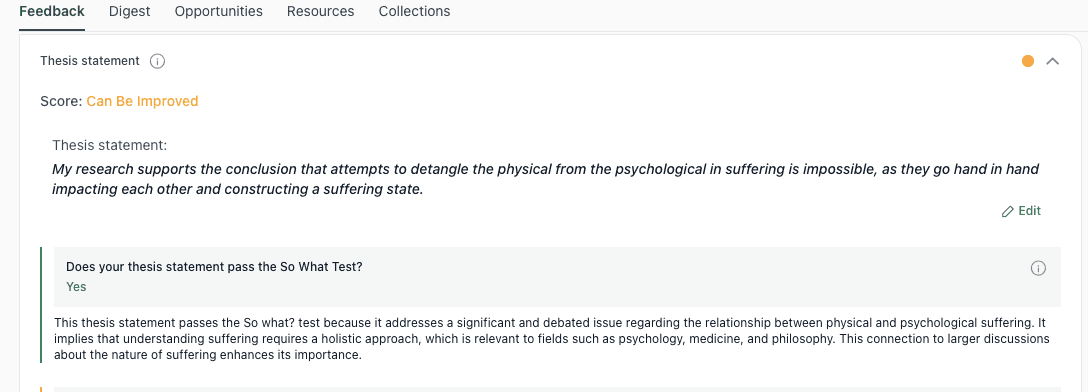
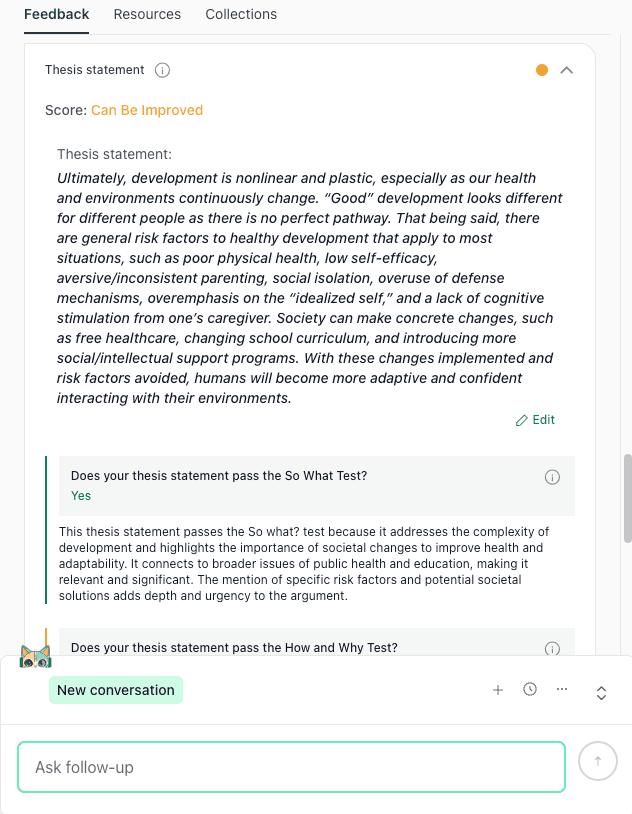
A theoretical thesis statement requires synthesis and philosophical argument, not a testable prediction. Forcing a statistical hypothesis onto a claim like the one above would fundamentally break the research design.
For example, the screenshot above shows a thesis statement for a theoretical paper arguing that physical and psychological suffering cannot be detangled. This argument relies on synthesis and logic. Trying to turn this kind of thesis statement into a measurable statistical hypothesis would distort the method rather than clarify it.
When a Thesis Statement Does Not Need a Hypothesis
Many forms of academic writing rely on a thesis statement without requiring a hypothesis at all. (In fact, while hypotheses are methodologically dependent, every paper needs a thesis statement). This includes argumentative essays, literature reviews, reflective papers, and theoretical analyses.
In these genres, the paper is built around interpretation and synthesis rather than empirical testing. What matters most is that the thesis statement is clear, specific, and defensible.
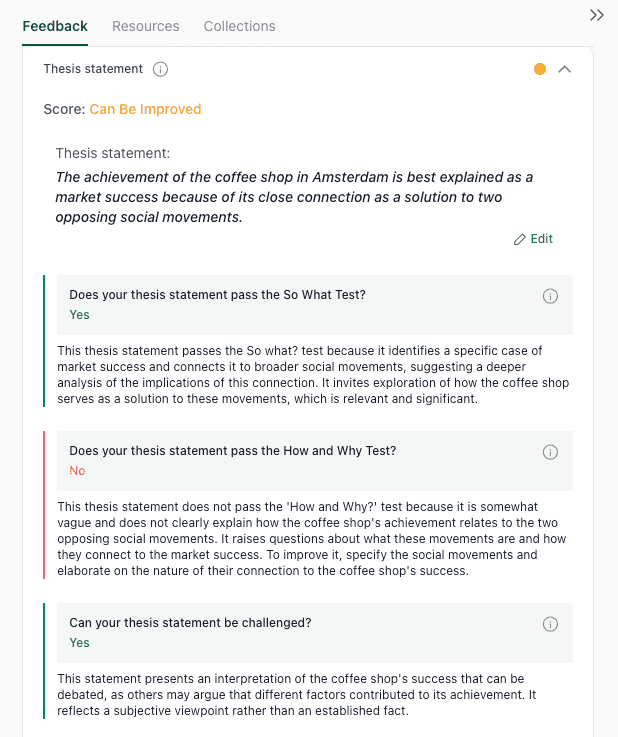
An interpretive thesis statement relies purely on historical or sociological argument, requiring no formal hypothesis. However, as thesify points out, it still must pass rigorous academic stress tests.
For example, an interpretative thesis statement analyzing a historical or social phenomenon is a highly effective, arguable claim. It addresses a specific case, passes the "So What?" test, and invites a deeper exploration of themes, completely independent of a testable prediction.
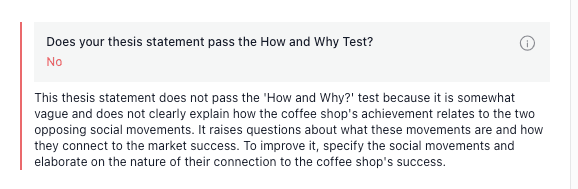
-> Expert Tip: Why the ‘How and Why’ Thesis Statement Test Matters
In the example above, thesify rightly flags that the thesis statement needs improvement because it is too vague. It mentions "two opposing social movements" but fails to specify what they are or how they led to market success.
Weak Original: The achievement of the coffee shop in Amsterdam is best explained as a market success because of its close connection as a solution to two opposing social movements.
Strong Revision: The achievement of the Amsterdam coffee shop model is best explained as a market success because it provided a commercially viable compromise between two opposing social forces: the 1970s youth counterculture demanding recreational tolerance and the municipal establishment seeking to regulate and tax the underground black market.
By naming the exact movements and explaining the "how" (a commercially viable compromise), the thesis statement becomes clearer, more precise, and easier to defend in a humanities or social sciences paper.
When a Thesis Statement Appears Alongside a Hypothesis
In empirical research papers, the introduction often contains both. In that case, the hypothesis states what the study expects to find (e.g., predicting a correlation between socioeconomic status and referral rates), while the thesis statement explains what the paper ultimately argues based on that evidence.
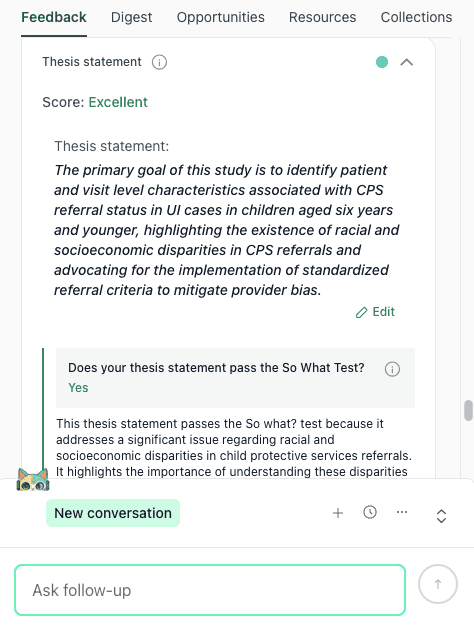
In empirical research, the hypothesis tests the specific variables, while the thesis statement summarizes the primary goal and advocates for the overarching conclusion—such as mitigating provider bias.
The hypothesis helps shape the rigid research design, but the thesis statement helps shape the paper’s final narrative. As seen above, an excellent empirical thesis statement goes beyond just listing the tested variables; it highlights the meaning of the results and advocates for a broader impact.
The Relationship: Research Question vs. Hypothesis vs. Thesis Statement
In academic writing, these three elements often appear at different stages of a research project. When properly aligned, they form a unified, logical chain that moves a study from a broad point of inquiry to a highly specific methodology, and finally to a definitive conclusion.
If you are conducting qualitative or humanities-based research, this lifecycle may bypass the hypothesis. However, in empirical and quantitative research, these three elements must directly align.
1. Research Question: What Are You Asking?
Your research question establishes the precise scope and boundaries of your investigation. Regardless of the discipline, a research question is exploratory but highly targeted. In the empirical sciences, it directly dictates the required methodological pathway. If you are still refining the question that drives your study, our guide on how to strengthen research questions explains how to make that first step more precise.
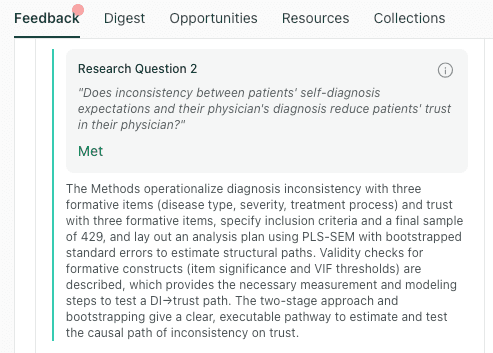
A strong research question sets the analytical trajectory. Here, thesify confirms that the research question successfully dictates a clear, executable pathway for data collection and modeling.
As demonstrated above, a well-constructed research question identifies the specific constructs (e.g., diagnosis inconsistency and patient trust) that the researcher will need to operationalize and measure.
A Strong Research Question Should Shape Your Method
In empirical research, your research question should already imply your study design. For example, if your research question asks how people interpret a social process or institutional practice, the method will need access to the right kinds of texts, interviews, or observations.
If your research question asks whether an intervention reduces a measurable outcome, your method will need a comparison structure, a defined outcome, and a credible analysis plan.
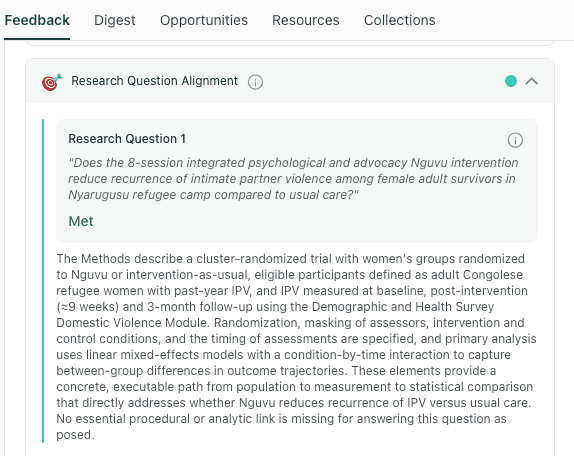
A strong research question gives the study a clear route from the problem being asked to the outcomes and analysis needed to answer it.
The example above shows why research question quality matters early. A strong question does not leave the rest of the study to improvise. It already points toward the constructs that will need to be operationalized, the outcomes that will need to be measured, and the type of comparison the method will have to sustain.
A Research Question Can Be Clear and Still Be Too Broad
At the same time, a research question can be conceptually strong and still be methodologically too broad. That problem appears when the wording of the question promises more than the method can actually answer.
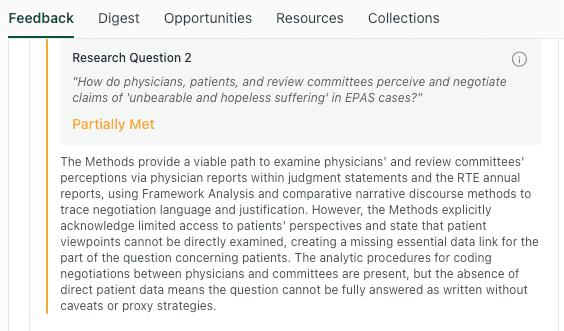
A research question may be conceptually strong but still too broad if the available methods cannot answer every part of it.
The above example illustrates how a research question is only successful when the sources and analytic procedures are actually capable of answering it as written. In other words, a research question does not just define the topic. It also defines the limits of what the project can plausibly claim to know.
2. Hypothesis: What Is Your Predicted Answer?
In quantitative and empirical research, the hypothesis translates the research question into a testable prediction. This is the point at which the project stops asking only what it wants to know and starts stating what it expects the evidence to show.
That is the core difference in research question vs. hypothesis. The research question opens the inquiry. The hypothesis narrows that inquiry into a predicted relationship, difference, or effect that the method can evaluate.
A useful hypothesis is not simply a plausible idea. It has to be specific enough to test. That means the paper needs to state what outcome is primary, when it will be assessed, and what statistical test or model will evaluate the prediction. Without that level of specificity, the hypothesis may sound rigorous while remaining too vague for reviewers to judge properly
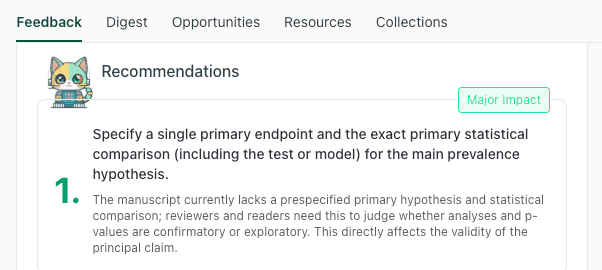
A hypothesis is only as strong as its testing parameters. Academic reviewers require explicitly defined primary endpoints and statistical models to judge whether the findings genuinely evaluate the hypothesis.
This is where many weak manuscripts break the logical chain. They introduce a hypothesis in the introduction, but the method does not clearly specify how that hypothesis will be tested. Once that happens, readers can no longer tell whether the analysis is confirmatory or exploratory. A strong hypothesis, then, is not just a prediction. It is a prediction tied to a clearly defined testing framework.
Not every project needs this stage. In many qualitative and humanities-based studies, there is no formal hypothesis because the project is not designed to predict a measurable outcome in advance. In those cases, the research question remains the primary organizing device until the argument is refined into a thesis statement.
3. Thesis Statement: What Is Your Final, Evidence-Backed Conclusion?
Once your data is analyzed or your thematic synthesis is complete, your research culminates in a thesis statement. In the finished manuscript, that statement usually appears in the introduction as the central claim the paper will defend.
The Thesis Statement Turns Inquiry Into Argument
A research question defines what the project wants to understand. A hypothesis, where one is used, predicts what the study expects to find. The thesis statement comes later. It presents the paper’s final, evidence-backed claim.
By the time your thesis statement appears in your paper, it should express a conclusion that the manuscript can now support through analysis, interpretation, and evidence. In practice, this means the thesis statement is not simply descriptive. It tells your reader what the paper argues and why that argument matters.
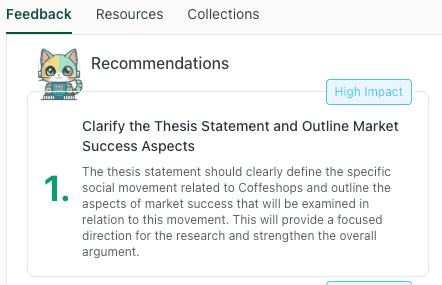
A strong thesis statement specifies the exact relationship, claim, or interpretation the paper is prepared to defend.
Expert Tip: A manuscript may have an interesting topic, but if the central claim remains too broad or underdefined, the argument will still feel unstable. A strong thesis statement has to move beyond general significance and identify the precise claim the paper will prove.
The Thesis Statement Acts as the Structural Anchor of Your Paper
Your thesis statement is a binding claim that requires systematic proof. Every major section that follows should trace back to it. If a paragraph, subsection, or evidentiary detour cannot be connected clearly to the thesis statement, it weakens the coherence of the paper.
That is especially important in longer manuscripts, where writers often accumulate strong material that does not actually support the central claim. Thus, when revising your work, test whether each paragraph advances the argument established in your thesis statement.
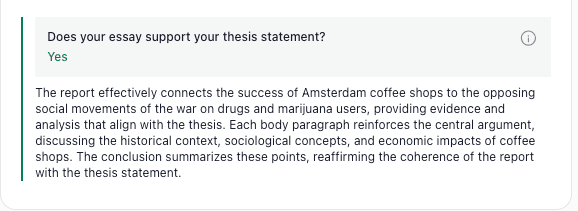
A thesis statement acts as a structural anchor. The thesify evaluation above illustrates how specific body paragraphs—in this case, discussing historical context and economic impacts—must trace directly back to the central argument.
This is the practical value of a strong thesis statement. It gives the paper internal discipline. The reader can see how the argument develops, and the writer has a clear standard for deciding what belongs in the manuscript and what does not.
The Thesis Statement Must Match the Actual Findings
A thesis statement is a binding claim, but it is not immune to revision. If your empirical data or qualitative analysis fails to support your initial claim, the thesis statement must be revised to reflect the actual findings. You cannot force the data to fit the thesis; the thesis must accurately summarize the data.
This is one of the most important differences between a hypothesis and a thesis statement. A hypothesis is written before the analysis as a prediction. A thesis statement must reflect what the analysis actually shows. In empirical work, that may mean revising the original claim after the results are clear. In qualitative or humanities-based work, it may mean refining the interpretive argument once the full analysis has revealed a different pattern than expected.
A final thesis statement must explain how and why the evidence justifies the paper’s conclusion, not simply restate an initial assumption.
This is why the thesis statement belongs at the end of the project’s logical sequence. It is the point at which your paper stops asking or predicting and starts arguing. When it is aligned with the evidence, it gives the paper a clear and defensible conclusion.
Ultimately, the Research Question opens the investigation, the Hypothesis provides the framework to test it, and the Thesis Statement brings the argument to a clear, evidence-based conclusion.
Hypothesis vs Thesis FAQs
If you are still untangling these concepts as you outline your paper, here are quick answers to the most common questions regarding hypotheses and thesis statements.
Is a Thesis the Same as a Hypothesis?
No. A thesis and a hypothesis are not the same thing. A hypothesis is a testable prediction made before analysis. A thesis statement is the central claim the paper can defend after analysis. Simply put: a hypothesis predicts an outcome, whereas a thesis statement presents a final, evidence-backed conclusion.
Can a Thesis Include a Hypothesis?
Yes. A thesis project can include a hypothesis if the study is designed to test a specific prediction. This is common in quantitative, experimental, and intervention-based research, where the hypothesis gives the project a clearly defined claim to evaluate. However, your one-to-two sentence thesis statement should usually not be written as a hypothesis, because the two serve different functions.
A paper can therefore include both a hypothesis and a thesis statement, but they do not do the same work. The hypothesis states what the researcher expects to find. The thesis statement explains what the paper can now argue after the evidence has been analyzed.
In empirical research, a paper may begin with a hypothesis and later evaluate whether the findings actually support it. The final thesis statement should reflect that evidence rather than repeat the original prediction.
A strong academic paper does not assume the original hypothesis was correct. It evaluates that prediction against the results and then frames the final argument accordingly.
Do Qualitative Theses Need a Hypothesis?
Usually not. Qualitative theses often rely on research questions rather than formal hypotheses. That is because qualitative work is typically designed to explore meanings, experiences, interpretations, or social processes rather than test a predefined causal prediction.
In those cases, the project usually moves from a research question to a central argument or thesis statement without using a formal hypothesis in between. What matters most is that the research question is answerable with the chosen sources and methods, and that the final argument reflects what the analysis actually shows.

Instead of a hypothesis, a qualitative research project defines a clear research gap and establishes a targeted aim to explore it.
What is the Difference Between a Thesis Statement and a Hypothesis?
While both outline the core trajectory of your research, a hypothesis dictates the predictive methodology of an empirical study, whereas a thesis statement synthesizes the final analytical conclusions of the manuscript.
Does Every Research Paper Need a Hypothesis?
No. A research paper only needs a hypothesis if the design is built to test a specific prediction. Quantitative, experimental, and intervention-based studies often require one. Qualitative, interpretive, and many humanities-based papers usually do not.
A paper without a hypothesis is not methodologically weaker by default. It simply belongs to a different research tradition, one that is often organized around research questions, aims, and interpretive claims rather than predictive testing.
Where Does the Hypothesis Go in a Thesis or Research Paper?
In most empirical papers, the hypothesis appears in the introduction, usually after the research question and before the full methods section. That placement helps the reader understand what the study is trying to test before they encounter the details of the design and analysis.
The exact wording and position vary by discipline, but the logic stays the same: the research question introduces the problem, the hypothesis states the predicted answer, and the rest of the paper shows whether the evidence supports it.
What Makes a Strong Thesis Statement?
A strong thesis statement must be defensible, specific, and pass the "So What?" test. A fact is not a thesis. A strong thesis statement must take a definitive stance on the data or literature, pushing the reader to see the topic in a new light.
If your thesis statement merely summarizes a topic without taking a stance or proposing a deeper connection, it lacks the urgency and depth required for higher-level academic writing.
How Do You Strengthen an Existing Thesis Statement?
You strengthen a thesis statement by ensuring your manuscript provides concrete evidence that directly supports it, and by actively addressing potential counterarguments.
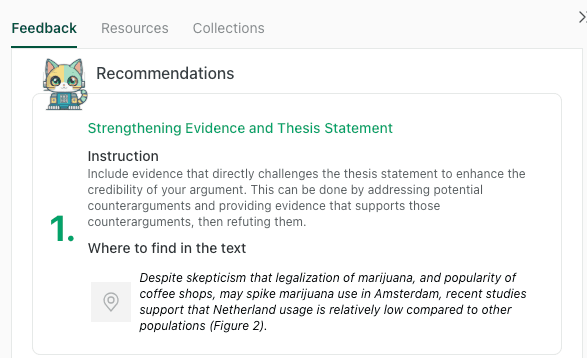
thesify evaluates the strength of a thesis statement by checking if the manuscript addresses and refutes potential counterarguments with concrete evidence.
By anticipating skepticism and incorporating data that refutes potential counterarguments, you instantly enhance the credibility and academic rigor of your central claim.
Ensure Alignment in Your Draft with thesify
If you want to check whether your research question, hypothesis, and thesis statement are working together logically, you can sign up to thesify for free, upload your draft, and review the structural feedback before your next revision.
Related Posts
Drafting a Clear, Testable Research Hypothesis: In doctoral research, a precise hypothesis is the compass that directs your study. Unlike a broad question, which simply identifies a topic, a research hypothesis makes a testable claim about how one variable relates to another in a defined population. Universities emphasise that hypotheses must be grounded in evidence and theory and should be stated in the present tense. Learn what makes a good research hypothesis, explore types (null, alternative, directional), follow a step‑by‑step method and see psychology and medical examples.
Do all assignments need a thesis? Yes, and here’s why: Every assignment needs a thesis statement. A common misconception is that narrative or reflective pieces don’t require theses. While creative writing or personal narratives may not have a formal thesis, academic reflective essays and response papers still need a focus (often an implied thesis about what was learned or what perspective is taken). Learn a thesis statement’s purpose across essays, scientific papers, and reports, and how thesify can help you refine yours.
Evaluate Your Thesis Statement Before You Write More: This comprehensive guide helps you evaluate your thesis statement effectively. You will learn essential evaluation criteria, apply practical tools, and see a concrete example of how feedback from thesify can enhance thesis clarity. These strategies apply broadly, regardless of your academic discipline or writing experience. Understanding the qualities that constitute a strong thesis statement will strengthen your academic writing.