How to Submit a Manuscript for an Academic Conference: A Step-by-Step Guide

Submitting your first paper to a conference is a rite of passage for every researcher. It is the moment your work moves from the isolation of the lab or library into the public sphere. But if you are wondering how to submit a manuscript for an academic conference, you likely already know the anxiety that comes with it.
Unlike journal submissions, which are rolling, conferences have strict "Call for Papers" (CFP) deadlines that wait for no one. The submission portals can be confusing, formatting guidelines are often rigid, and the fear of a "desk rejection" is real.
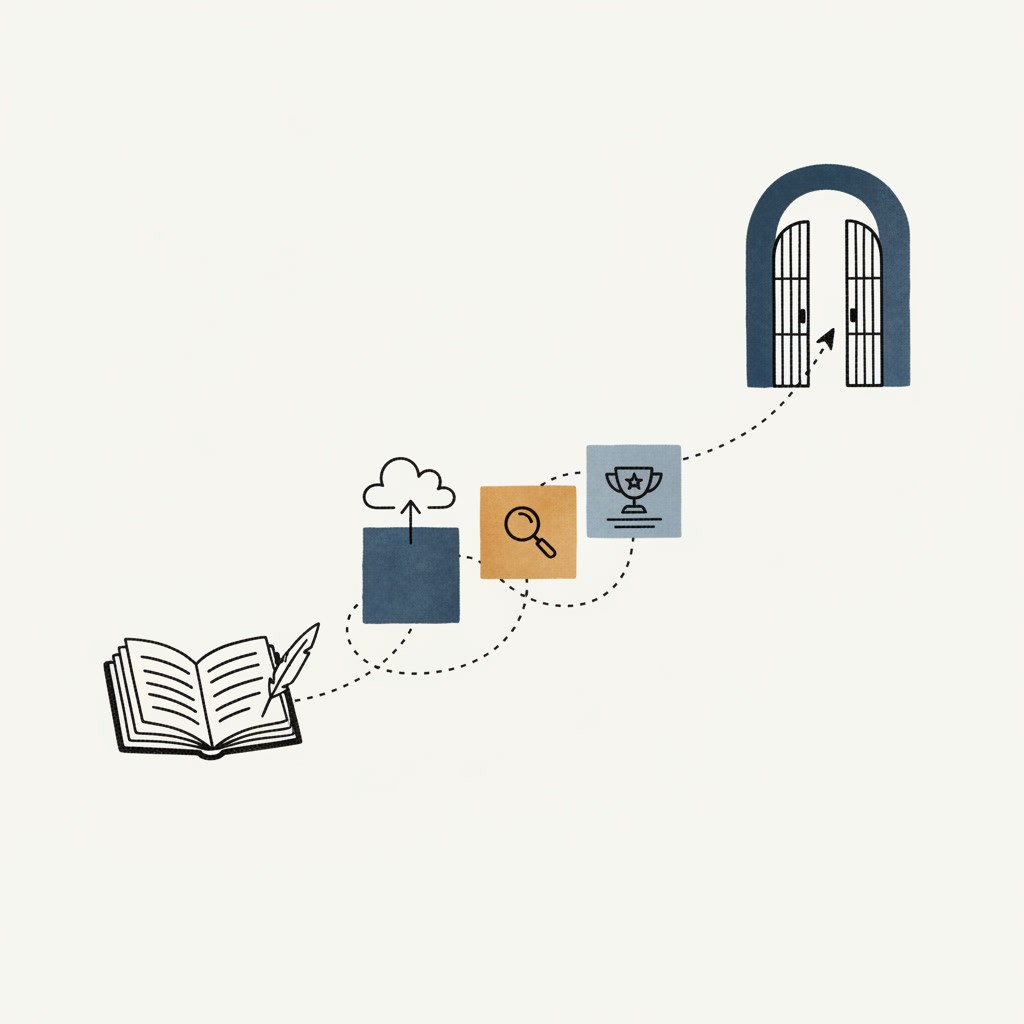
However, the process doesn't have to be a guessing game. By breaking the workflow down into clear stages—and utilizing academic AI tools to quality-check your work—you can hit "submit" with confidence. This guide will walk you through the essential steps to get your research accepted, from finding the perfect venue to navigating the final review
Phase 1: Finding the Right Venue (Don't Just Guess)
Before you worry about formatting margins or polishing your abstract, you must answer one question: Is this the right home for my research?
A common mistake early-career researchers make is chasing "prestige" over "fit." You might have a groundbreaking paper on AI in Education, but if you submit it to a general Computer Science conference that focuses heavily on hardware, you risk a quick rejection—not because the work is bad, but because it’s out of scope.
Use AI to Find Your Perfect Match
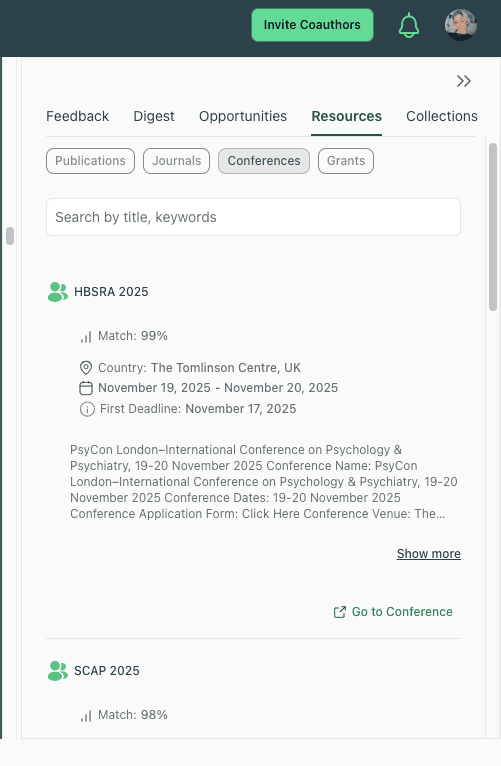
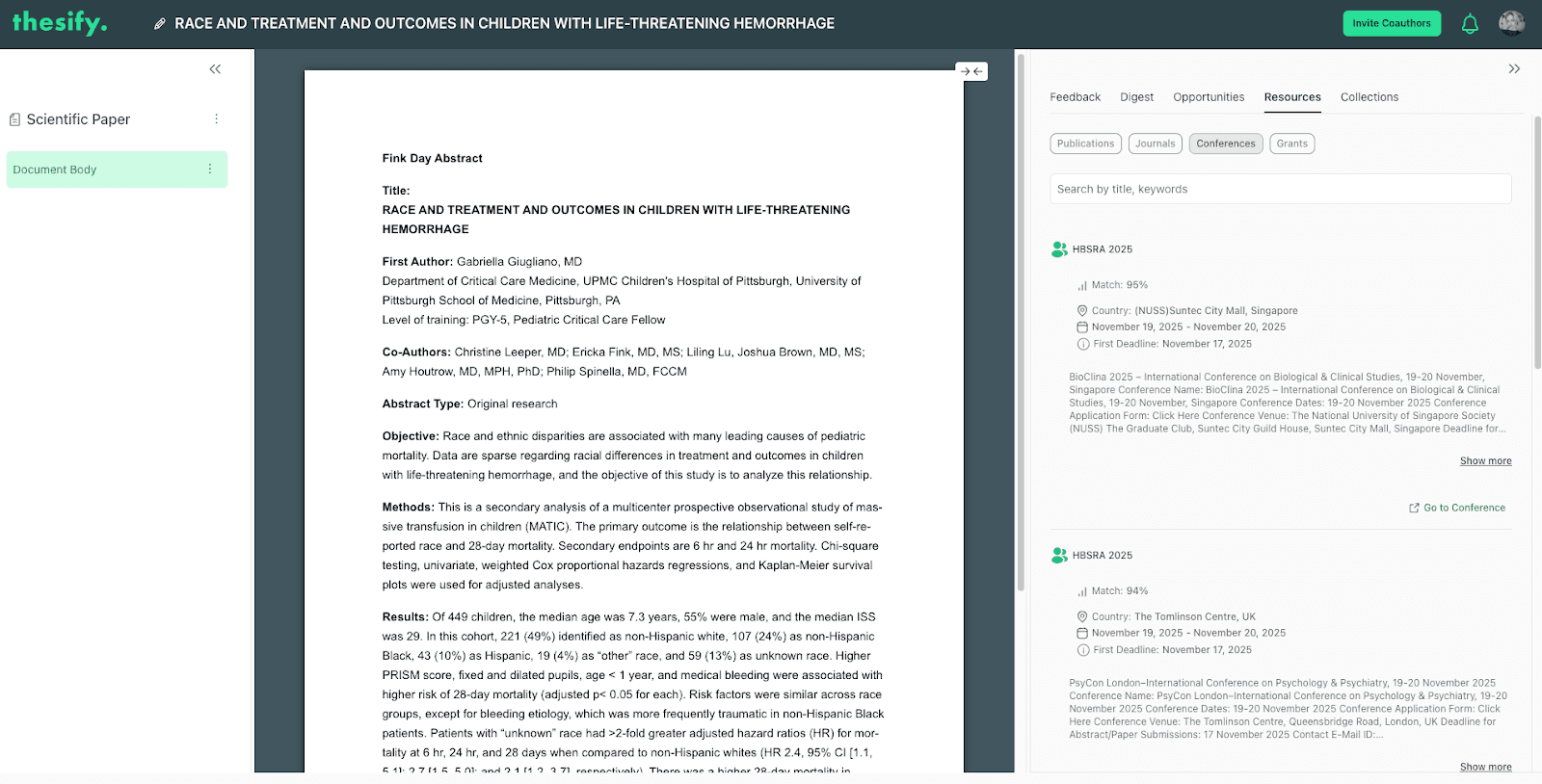
Stop scrolling through listservs. thesify analyzes your text to provide a list of high-impact conferences tailored to your specific research topic.
In the past, finding a conference meant scrolling through endless listservs or asking a busy supervisor. Today, you can use AI to analyze your manuscript’s abstract and match it to upcoming conferences that are looking for exactly your type of research.
Instead of guessing, use data to drive your decision. Read our guide on Going Beyond Journal Recommendations: How AI Supports Conference Submission to see how tools like Theo can help you identify high-impact venues that align with your specific findings.
Beware of the "Predatory" Conference Trap
As you search for a venue, you will likely encounter "Call for Papers" emails that seem too good to be true—guaranteed acceptance, incredibly fast review times, or unusually high fees. These are often predatory conferences: scam events that exist solely to profit from researchers' publication fees without providing legitimate peer review.
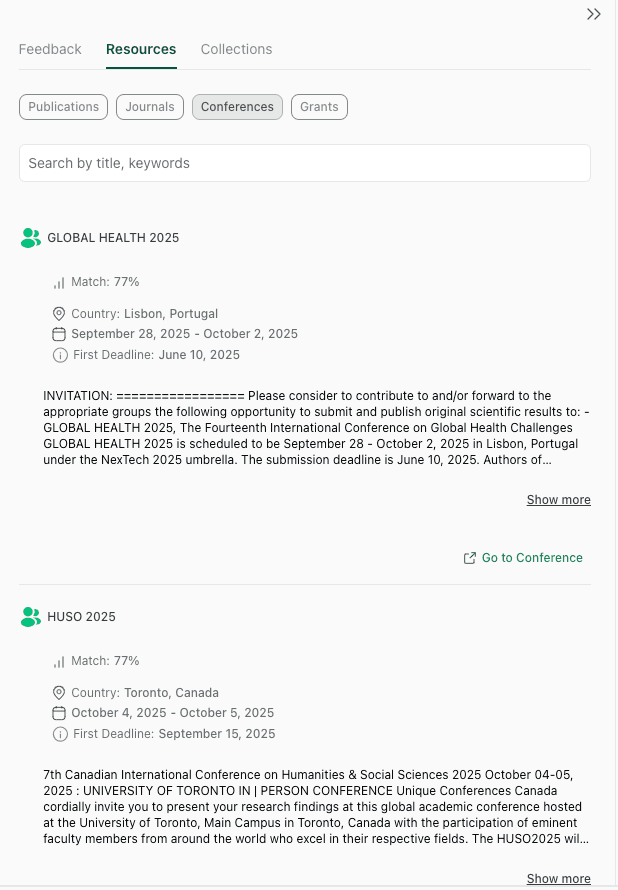
Stick to verified venues. thesify provides a curated list of conferences with transparent deadlines and locations, helping you avoid predatory scams.
Submitting to these venues can hurt your academic reputation and waste your funding. Always verify the organizer before you upload a single file. For a checklist on how to spot these scams, check our deep dive on Predatory Conferences: Warning Signs and How to Avoid Them.
Once you have verified the venue and confirmed the scope, you are ready to start preparing your manuscript package.
Phase 2: The "Abstract First" Strategy
Once you have identified your target conference, the next step isn't necessarily refining your full paper—it is perfecting the abstract. For many academic conferences, the abstract is the only document reviewers see during the initial screening. If this short summary doesn't immediately hook the reader, your full manuscript may never get read.
Why the Abstract is Your Gatekeeper
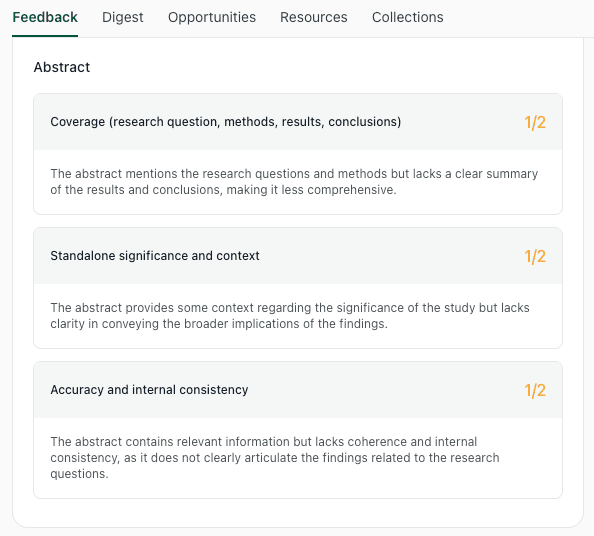
Ensure your abstract hits every mark. thesify checks for missing elements like "results" or "implications" that often lead to rejection.
Conference reviewers are often volunteers reading dozens of submissions in a short period. They do not have time to hunt for your main point. Your abstract acts as a "gatekeeper": it must convince the reviewer in under 300 words that your research is novel, relevant, and scientifically sound.
A common pitfall is spending too much time on the "background" and not enough on the results. To avoid this, successful conference abstracts typically follow a specific "hourglass" structure:
Context (1-2 sentences): The broad problem.
Gap (1 sentence): What is missing in current research?
Method (1-2 sentences): How did you solve it?
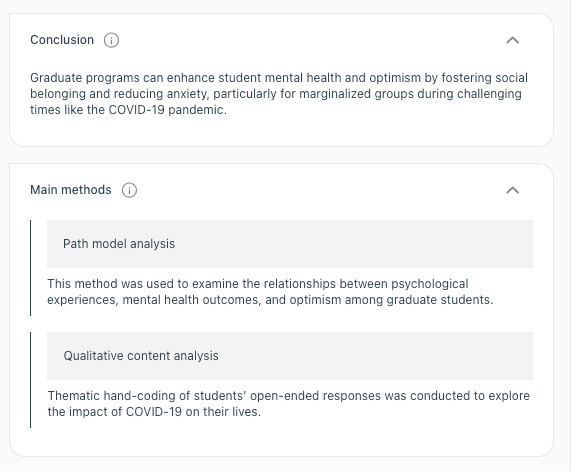
Verify your structure. Use the Paper Digest to see if your "Methods" and "Conclusion" are clear enough for an AI to extract accurately.
4.Results (2-3 sentences): What did you actually find? (Be specific!)
5. Impact (1 sentence): Why does this matter?
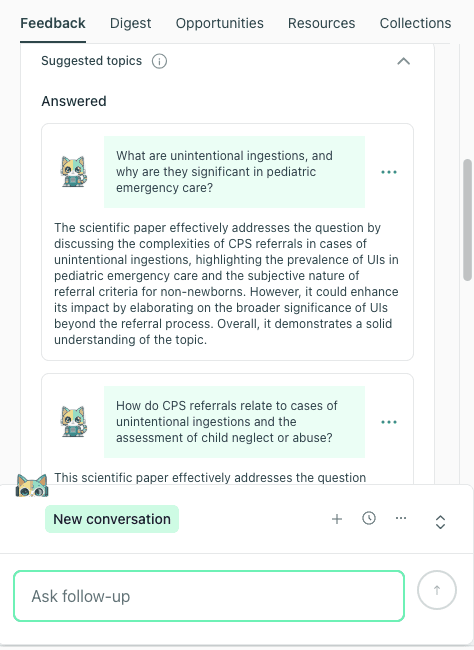
Clarify your impact. thesify’s suggested topics feedback questions can ensure your abstract explicitly answers "So what?" regarding your research findings.
Active Voice vs. Future Tense
When writing for a conference, avoid using future tense phrases like "In this paper, we will discuss...". Reviewers want to know what you have already done. Switch to active, past, or present tense: "We analyzed..." or "This paper demonstrates...".
Tip: Condensing months of research into a single paragraph is one of the hardest parts of academic writing. If you are struggling to stay within the word limit while maintaining flow, follow our step-by-step on How to Write an Abstract.
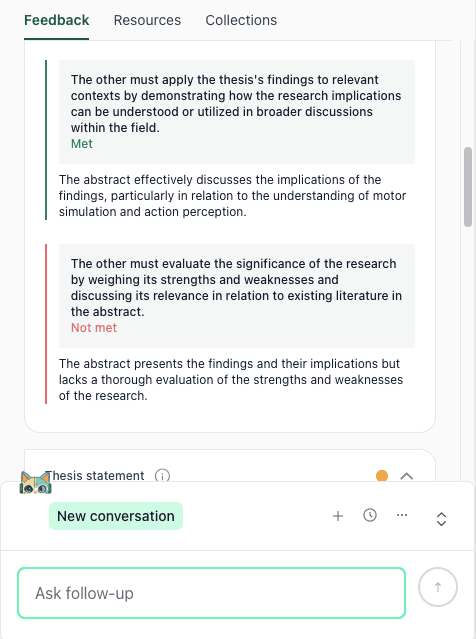
Don't get rejected for lack of impact. Check your abstract against specific rubrics to ensure you clearly articulate the significance of your work.
Phase 3: Formatting and Avoiding the "Desk Reject"
You might have groundbreaking results, but if your file doesn't look right, it can be rejected before a reviewer even reads the title. This is known as a "desk reject," and it is entirely preventable.
Strict Adherence to Templates (IEEE, APA, LNCS)
Every conference will provide a specific template (usually for Microsoft Word or LaTeX) that dictates font size, margins, and citation style. These are not suggestions—they are rules.
Do not change the margins to squeeze in more text.
Do not exceed the page limit (even by a few lines).
Do check your citation style (e.g., IEEE vs. APA).
If you are unsure if your paper's structure meets standard scientific requirements, it helps to review the fundamentals. Check our IMRaD Format Guide to ensure your Introduction, Methods, Results, and Discussion are logically organized before you apply the conference template.
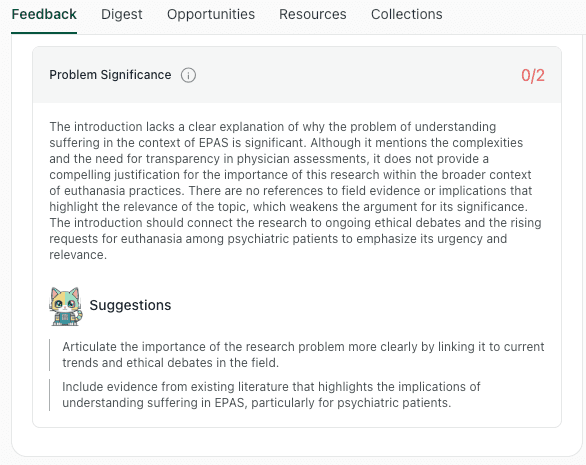
Content comes before formatting. Identify weak problem statements in your introduction before you struggle with the conference template.
Anonymizing for Blind Review
Most top-tier conferences use a double-blind peer review process, meaning reviewers must not know who wrote the paper. Before you upload your PDF, you must ensure you haven't accidentally revealed your identity.
Remove author names and affiliations from the title page.
Neutralize self-citations: Instead of saying "As we showed in our previous work [1]...", say "As shown in [1]...".
Check file properties: Remove author metadata from the PDF file settings.
Phase 4: Utilizing AI for Pre-Submission Manuscript Review
By the time you reach the final draft, you are likely suffering from "author snowblindness." You have read your own sentences so many times that your brain fills in the gaps, making it nearly impossible to spot logical inconsistencies or structural weaknesses. This is where modern AI tools bridge the gap between a draft and a submission-ready paper.
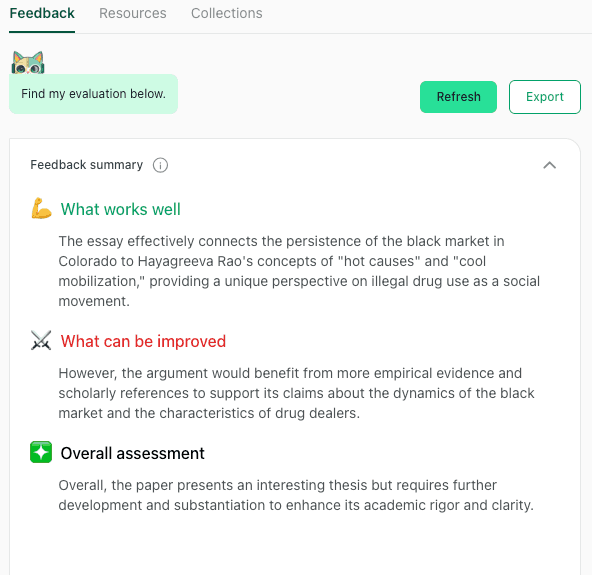
Cure "author snowblindness." Get an instant, objective summary of your paper’s strengths and weaknesses to guide your final revisions.
Simulating the Peer Review Process
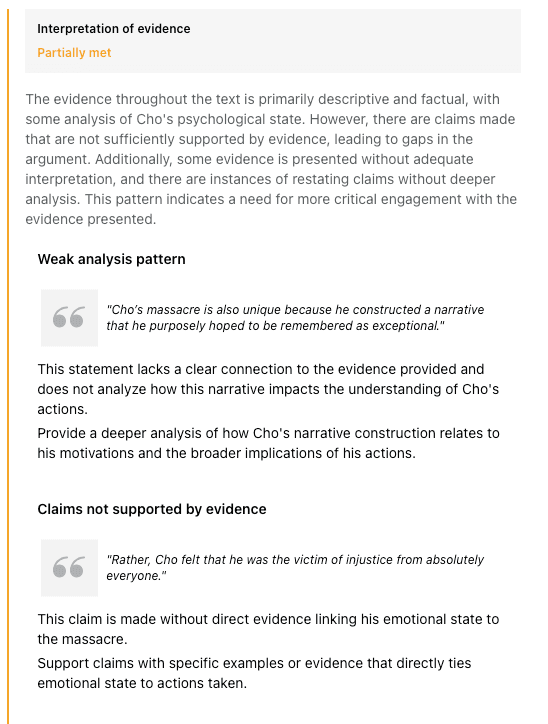
Don't let a reviewer catch your weak points first. Use AI tools, like thesify, to identify unsupported claims and gaps in logic before you submit.
Standard grammar checkers are insufficient for academic submissions. They catch typos, but they cannot assess argumentation quality or narrative flow. To increase your chances of acceptance, you need to simulate a peer review before a human ever sees your work (a pre-submission review).
Using an AI-powered academic writing assistant like thesify allows you to perform a "mock review" of your manuscript.
Argument Structure: Does your conclusion directly answer the research question posed in the introduction? thesify scans for logical coherence to ensure your narrative "hourglass" is intact.

Strengthen your core argument. thesify highlights opportunities to make your thesis more debatable and engaging for an academic audience.
Clarity & Readability: International conferences often have reviewers from diverse linguistic backgrounds. AI can highlight overly complex sentence structures that might confuse a non-native English speaker, ensuring your core message isn't lost in translation.
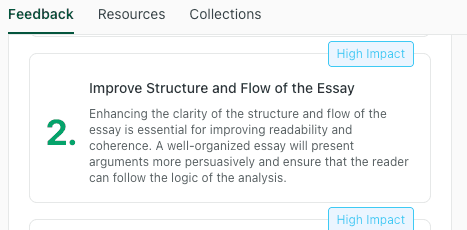
Ensure your narrative flows. Identify structural weaknesses that might confuse reviewers, especially those from different linguistic backgrounds.
Pro Tip: Don’t just look for errors; look for alignment. Use thesify to verify that the keywords in your abstract match the terminology used in your conclusion. This alignment is a subtle signal of quality that reviewers unconsciously look for.
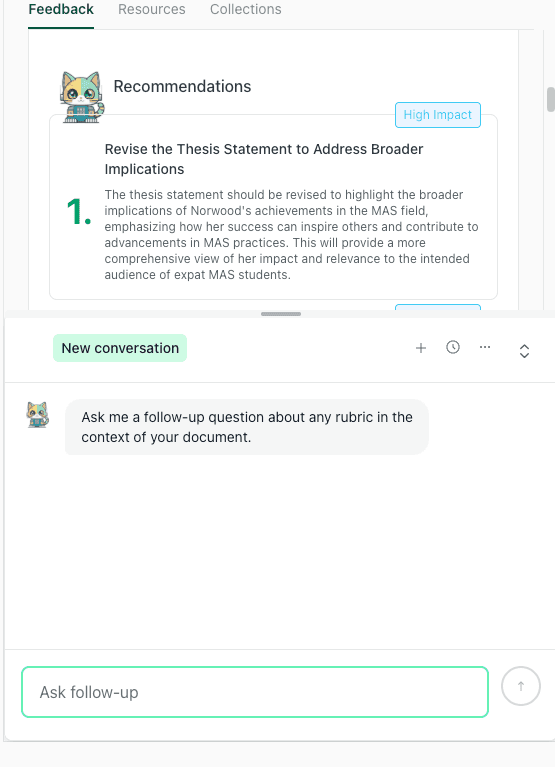
Strengthen your core argument. Receive actionable recommendations to refine your thesis and use the Chat with Theo feature to ask targeted follow-up questions about the feedback you recieve.
Checking for "Scope Drift"
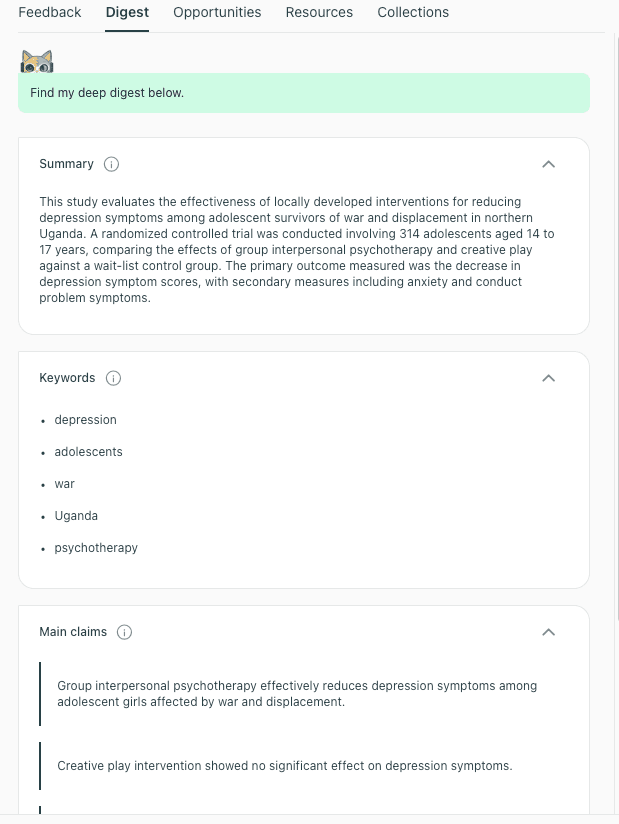
Verify your scope instantly. The Digest feature extracts your core keywords and summary, making it easy to see if you align with the conference themes.
One of the most common reasons for rejection is not the quality of the science, but the relevance to the conference theme. Before submitting, use the "Paper Digest" feature in thesify to generate a summary of your own work. Compare this summary against the conference's "Call for Papers" description. If the AI's summary of your work differs significantly from the conference's stated themes, you may need to reframe your abstract to better highlight the relevant aspects of your research.
Phase 5: Navigating the Conference Submission Portal
The actual upload process is often trivialized, but systems like EasyChair, ScholarOne, or Edas can be complex. Technical errors here can result in your paper being miscategorized or assigned to the wrong reviewers.
Optimizing Metadata for Reviewer Matching
When you create a new submission, you will be asked to enter "metadata"—keywords, topics, and abstract text—into the system's text boxes. This data is crucial because automatic algorithms often use it to assign your paper to reviewers.
Consistency is Key: Ensure the abstract you paste into the text box is identical to the one in your PDF. Discrepancies can look unprofessional.
Topic Selection: Most portals ask you to tick "primary" and "secondary" topics. Do not select topics simply to "broaden your reach." Selecting a topic you only tangentially touch upon can result in your paper being assigned to a specialist in that field who will critique your lack of depth. Stick to your core contribution.
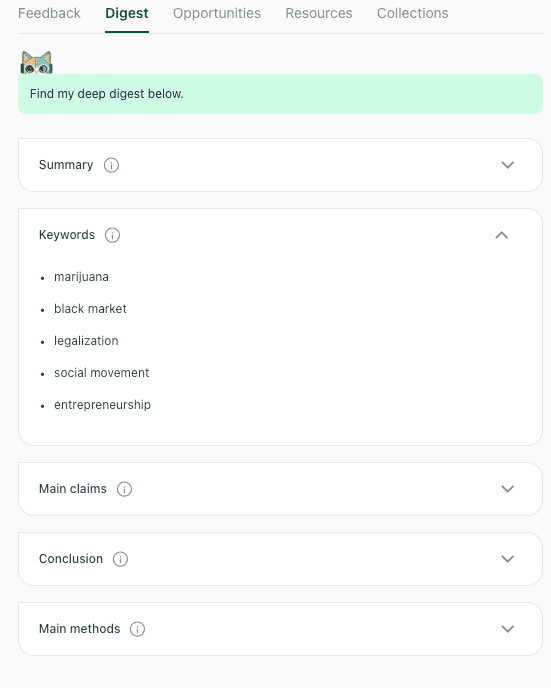
Don't guess your metadata. Use the Digest to extract the most relevant keywords from your text, ensuring you are matched with the right reviewers.
Managing Conflicts of Interest (COI)
Academic integrity is paramount. You will be asked to declare Conflicts of Interest—usually listing people you have co-authored with recently or who work at your institution.
Be Thorough: If you fail to list a reviewer who is a close colleague, and they are accidentally assigned your paper, it can lead to the submission being pulled later for ethical violations.
System Constraints: Some systems allow you to list "non-preferred reviewers" (people who should not review your work due to professional rivalry). Use this feature sparingly and only if you have a valid, justifiable reason.
The "Zero Hour" Warning
Conference submission portals are notorious for crashing in the final hours due to traffic spikes. A submission timestamped at 23:59:01 is often automatically rejected by the system.
The Strategy: Create your account and enter all author metadata (affiliations, emails, bios) at least 48 hours in advance. This leaves only the final PDF upload for the last day, minimizing the risk of a timeout error.
Conclusion: From Draft to Conference Acceptance
Submitting a manuscript for an academic conference is a rigorous process that tests not just your research, but your ability to communicate it effectively. It requires balancing scientific accuracy with strict formatting, engaging storytelling, and strategic venue selection.
Don't leave your acceptance to chance or rely solely on fatigued eyes to spot critical errors. By integrating AI tools into your workflow, you can ensure your submission is structurally sound, logically coherent, and perfectly matched to the venue.
Ready to finalize your paper?
Upload your manuscript to thesify today. Let our AI assistant Theo check your argument structure, clarity, and references, giving you the confidence to hit "Submit" and matching your paper with its best conference fit.
Related Posts
Going Beyond Journal Recommendations: How AI Supports Conference Submission & Academic Publishing: Picking the right conference can shape your career. The right conference means visibility: Papers presented at flagship conferences consistently achieve significantly higher citation rates and broader engagement within the first two years compared to those shared at lower‑tier events. Learn how to go from search to shortlist using thesify’s tools. Get a walk through on how to upload or paste you abstract, receive a PaperDigest summary to match keywords, run the Conference Match, and plan a dual-track strategy using an ai journal recommendation tool (thesify’s auto-suggest journals).
Predatory Conferences: Warning Signs and How to Avoid Them: Predatory conferences are a growing menace in academia. These events masquerade as legitimate scholarly meetings but are organised primarily to collect registration fees. Early‑career researchers often receive flattering invitations to speak, but upon arrival they discover disorganised venues, missing keynote speakers and empty rooms. Learn what predatory conferences are, why they attract researchers, the warning signs to spot fake events, and practical steps to protect your research and career.
How to write a compelling abstract for your research: An abstract is a short summary—typically a paragraph of six to seven sentences—that lets readers grasp the essence of your research. It previews the context, problem, methods, key results and significance of your work so that people can decide whether to read the full paper. Get a step‑by‑step scaffold and examples for writing dissertation, journal and conference abstracts. Includes templates and a checklist.