No AI Assignments Built to Be AI-Resistant

Generative AI can produce competent first drafts, solve routine problem sets, and summarize readings with minimal effort. If you are using a no-AI policy for a particular assessment, the challenge is designing a task that still lets you observe learning when AI is readily available. Increasingly, university guidance emphasizes assessment design choices that reduce the payoff of shortcuts and make student thinking easier to evaluate.
This post follows our earlier guide, AI-inclusive assignment alternatives, which focuses on structured, transparent use of AI in learning activities. Here, you are designing the other side of the course assessment system: AI-resistant assignments (also called AI-proof or ChatGPT-proof assignments) where students must demonstrate their reasoning, choices, and process. No assignment is completely AI-proof, but you can make inappropriate outsourcing less rewarding and make learning more visible.
In this guide, you will get practical AI-resistant assessment design patterns you can implement quickly, including:
Oral vivas and in-class checkpoints that require real-time explanation
Process evidence (draft checkpoints, research logs, lab notebooks, change logs) that makes the work traceable
Peer review simulation and revision memos, including response-to-reviewers letters, to assess judgment and revision decisions
Fairness and accessibility guardrails so AI-resistant tasks remain workable for diverse students
AI-Resistant Assignments: Principles and Practical Examples
If you are designing no AI assignments, you are usually trying to answer one practical question: how do you create an assessment where you can still see student understanding when generative tools are widely available?
This section gives you the foundations before you move into specific assignment formats. You will (1) define what “AI-resistant” means in assessment terms, (2) decide when a no-AI approach is appropriate versus an AI-inclusive alternative, and (3) identify the design features that make common tasks harder to outsource.
By the end of this section, you will be able to:
Explain the difference between AI-resistant assignments and simple restrictions on tool use
Choose when to use no AI assignments versus AI-inclusive tasks (with a clear rationale)
Spot the “AI vulnerabilities” in a draft prompt, then revise it using concrete design levers
AI-Resistant Assignments: Definition
An AI-resistant assignment is structured so that a student’s submission must be supported by evidence of their own thinking, decision-making, and engagement with course materials. In practice, this usually means requiring at least one of the following:
Traceable process artifacts (drafts, logs, checkpoints)
Course-anchored context that a generic system cannot guess
A brief verification moment (oral explanation or in-class application)
“AI-resistant” is not a claim that AI cannot be used. It is a design choice that reduces the payoff of shortcuts and increases the visibility of learning.
When to Use No AI Assignments vs AI-Inclusive Alternatives
A no-AI assignment works best when you are assessing a capability that must be demonstrated directly, for example, foundational writing fluency, in-the-moment reasoning, or applied skills that you need to verify without outside assistance. It is also a strong choice for high-stakes assessment where you need confidence that the work reflects the student.
AI-inclusive alternatives are often a better fit for low-stakes practice, iterative drafting, or assignments where the learning outcome includes tool use, critique, or responsible workflow design. If you want a structured way to design those tasks, refer to AI-Inclusive Assignment Alternatives.
A practical course-level approach is to treat these as complementary. You can use AI-inclusive work to build skills and transparency, then use no-AI assessments to verify independent mastery at key points in the term.
What Makes an Assignment AI-Resistant
Before you start rewriting prompts, it helps to know what you are aiming for. AI-resistant tasks tend to share a small set of design features:
Course anchoring: The prompt depends on lectures, discussions, lab work, or datasets that are specific to your course.
Process evidence: You grade artifacts such as proposals, drafts, research logs, lab notebooks, change logs, or reflection memos.
Personalization: Students must make choices (topic constraints, local cases, self-generated data) that shape the final response.
Verification moments: You include brief oral defenses, in-class checkpoints, or timed components that require real-time explanation.
Rubrics that reward reasoning: Criteria prioritize justification, tradeoffs, interpretation, and methodological choices, not only polish.
Staged submission design: The task is broken into checkpoints that make last-minute outsourcing less viable.
In the next section, you will use these levers to build assignment types that are genuinely workable in higher education, including oral vivas, process-based projects, peer review simulations, and discipline-specific examples.
AI-Resistant Assignment Design Principles
Before you choose specific no AI assignment formats, it helps to start with a small set of design principles that consistently make AI shortcuts less effective. In this section, you will learn the core levers behind AI-resistant assessment design, so you can revise existing prompts, build new tasks from scratch, and explain your rationale to students. We begin with the most reliable principle across disciplines: assessing the student’s process, not just the final submission.
Evaluate the Process
Assessment should track how students think and work. Asking for drafts, annotated bibliographies, or research logs shines a light on the path to the final product. Process‑based assessment—where proposals, outlines, and final versions are graded separately—allows you to monitor learning and provide feedback at each stage.
Personalize and Contextualize
Tailor assignments to individual students or current events. NMU recommends using unique prompts, local datasets, or course‑generated surveys so that ready‑made AI answers are less relevant. For example, a social work course might require analysis of interviews with local practitioners, preventing students from submitting generic AI content.
Encourage Reflection and Metacognition
Reflection prompts deepen understanding and discourage outsourcing. You might ask students to submit a short essay explaining how they developed their argument or a video explaining the challenges they faced. Reflective tasks encourage metacognition and make students’ decision-making legible, which supports fair grading and better follow-up questions.
Scaffold and Stage Learning
Breaking assignments into stages builds accountability. Harvard’s Bok Center advises pairing AI‑assisted preparation with short, in‑class demonstrations—such as whiteboard proofs or oral mini‑vivas—to confirm mastery. Setting deadlines for proposals, drafts, and final submissions helps you plan and deters last‑minute AI reliance.
AI-Proof Assignment Types With Practical Examples
Once you have the core AI-resistant assignment design principles in place, the next step is choosing formats that make those principles operational in day-to-day teaching. This section gives you a set of AI-proof assignment types you can deploy as full assessments or as components within larger projects.
Each option is framed around what it helps you verify (for example, real-time reasoning, traceable process, or context-specific judgment), along with practical notes on how to run it in higher education settings. Where relevant, the examples align with common university guidance that emphasizes observable student thinking through in-class verification, staged submissions, and course-anchored tasks.
In-Class Tests and Oral Exams for AI-Resistant Assessment
If you need a no AI assignment that verifies independent mastery, real-time work is one of the most direct options. Oral presentations paired with a structured Q&A let you test whether the student can explain choices, defend claims, and respond to counterarguments without relying on prewritten text.
In-class writing and quick activities, such as one-minute papers, timed essays, short-answer prompts that require synthesis, and concept maps, shift assessment toward immediate reasoning and interpretation.
How to run it (quick template):
Give a prompt tied to specific lectures or readings, then collect a short in-class response.
Add a 3 to 5 minute oral follow-up for a rotating subset of students (especially workable in large classes).
Grade primarily on clarity of reasoning, use of course concepts, and ability to justify decisions.
Process-Based Assessment Projects That Make Student Work Traceable
A common weakness in “AI-proof assignments” is that the grade rests on a single final submission. Process-based design reduces that vulnerability by requiring students to produce work in stages, so you can see the development of ideas over time.
One practical model is to break a project into a topic proposal, outline, annotated bibliography, draft, revision plan, and final submission, and evaluate each stage with light but consistent feedback. When students know you will review interim artifacts, last-minute outsourcing becomes less viable, and you get better evidence of learning.
How to run it (quick template):
Require 3 to 5 checkpoints with short rubric criteria per checkpoint.
Ask for one paragraph at each stage explaining what changed and why.
Use the final grade as a weighted combination of process artifacts and the final product.
Personalized, Local-Data Assignments That Are Hard for ChatGPT to Outsource
Generic prompts invite generic outputs. If you want AI-resistant tasks, design prompts that depend on information students generate themselves or that is specific to your course context. University teaching guidance recommends personalization and context specificity, including tying work to current events or individual constraints, because it is harder to submit an AI-generated response that matches your exact parameters. In practice, this can mean student-collected data (interviews, observations, surveys), course-specific datasets, or analysis anchored in a local case.
How to run it (quick template):
Require an appendix with raw materials (field notes, interview questions, data tables).
Ask students to connect claims to at least two course concepts discussed in class.
Include a brief reflection on methodological choices and limitations.
Multimodal Assignment Formats That Reduce AI-Generated Submissions
Multimodal work, such as prototypes, experiments, multimedia presentations, or recorded explanations, can reduce dependence on AI-generated text because the student must demonstrate applied judgment and technical choices. Guidance on revising assignments to deter unauthorized AI use explicitly highlights creative projects, experiments, prototypes, and original research as formats that promote independent thinking and make simple text substitution less effective. The goal is not to avoid writing entirely, but to require students to show what they did, why they did it, and how they evaluated outcomes.
How to run it (quick template):
Require an artifact (prototype, recording, dataset) plus a short rationale memo.
Add a brief “walkthrough” where students explain one key decision and one tradeoff.
Grade the reasoning, documentation quality, and linkage to course learning outcomes.
Peer Review Simulation and Revision Memos for AI-Resistant Assignments
Peer review and revision are strong ChatGPT-proof assignment components because they assess judgment, prioritization, and responsiveness to critique, not just fluent prose. A workable pattern is a two-stage submission: students submit a draft, complete structured peer reviews using a rubric, then write a point-by-point response explaining which feedback they applied and why.
Teaching guidance explicitly recommends incorporating peer review as a way to discourage passing off AI-generated content, especially when students must defend their choices and revisions.
How to run it (quick template):
Provide a review form that targets thesis clarity, evidence quality, and reasoning gaps.
Require a revision memo plus a change log aligned to the rubric.
Optionally add a short conference or check-in to verify ownership of revisions.
Fair and Accessible AI-Resistant Assessments
If you are designing no AI assignments or other AI-resistant assessments, fairness and accessibility need to be part of the design. The goal is to reduce inappropriate AI outsourcing without creating barriers for students who have disabilities, limited time, inconsistent internet access, or uneven familiarity with academic conventions.
In practice, that means removing hidden assumptions from the prompt and the workflow. Do not assume students have consistent access to high-end devices, stable internet, paid tools, or the same cultural reference points. Instead, direct them toward the supports that already exist in your institution (library services, writing support, disability services, tutoring, technology loan programs), and design the task so the learning outcome is demonstrable through more than one equivalent mode.
Design moves that support fairness while keeping the task AI-resistant:
Provide instructions in multiple formats: a written brief plus a short in-class walkthrough, and a sample or annotated exemplar when possible.
Offer equivalent response modes: allow a written reflection or a short audio/video reflection when you are assessing reasoning and decision-making rather than prose style.
Use institution-supported, accessible tools: avoid requiring platforms that students cannot reliably access or that create unnecessary usability barriers.
Separate “communication quality” from “thinking quality” in the rubric: assess reasoning, evidence use, and methodological choices explicitly, and score language polish only if it is a stated learning outcome.
Keep verification moments structured: if you use oral check-ins or in-class checkpoints, make the criteria explicit, keep them brief, and plan accommodations as needed.
State the boundary conditions clearly: specify what is prohibited for this task (for example, generative text production) and what is permitted support (for example, accessibility software, spelling tools, translation support), so students are not guessing.
AI-Resistant Assignment Examples by Discipline
The same AI-resistant assignment design principles apply across fields, but the best implementation depends on what you are assessing (interpretation, method, calculation, design, or evidence-based argument). The examples below show how to build no AI assignments that require traceable process, course-anchored evidence, and verification of understanding, with minimal added complexity.
AI-Resistant Assignments in the Humanities
In a humanities literature seminar, you can design a ChatGPT-proof assignment by combining primary-source work with process artifacts and a short oral defense.
For example, students select a poem from a course-defined archive, submit an annotated bibliography that justifies each source, produce a draft close-reading essay, then complete a 8-10 minute viva (defense) where they defend their thesis and explain interpretive choices.
What you collect and grade:
Annotated bibliography (source choice rationale)
Draft + revision plan (what changed and why)
Viva notes or rubric (argument clarity, textual evidence, interpretive reasoning)
AI-Resistant Assignments in STEM Courses
In lab-based STEM courses, AI-resistant assessment often comes from requiring original data, documented method, and an in-class verification moment. Students design an experiment, maintain a lab notebook documenting each step, present preliminary findings in class, then submit a final report that includes a short reflection on design tradeoffs and sources of error. A timed in-class demonstration (whiteboard explanation, calculation check, or brief oral defense) confirms that the student can explain results and decisions.
What you collect and grade:
Lab notebook or method log (procedural decisions and data trail)
In-class explanation (reasoning under time constraints)
Final report + reflection (interpretation, limitations, ethical choices)
AI-Resistant Assignments in the Social Sciences
For social sciences, a strong AI-proof assignment structure is student-generated data plus staged interpretation. For example, students conduct short interviews or observations on community attitudes toward technology, submit their interview protocol and field notes, analyze themes using course frameworks, and present findings in a short multimedia presentation. Add staged submissions with peer review so progress is visible and revision decisions must be explained.
What you collect and grade:
Interview protocol + field notes (evidence trail)
Coding memo or analytic note (how themes were derived)
Presentation + reflection (framework application and limitations)
AI-Resistant Assignment Design Checklist for Instructors
Use this checklist for instructors when you are building no AI assignments (or revising an existing prompt into an AI-resistant assignment).
Step 1: Confirm That a No AI Assignment Is the Right Fit
A no-AI approach is usually justified when you are assessing independent performance, for example:
Foundational writing fluency, calculation, or applied reasoning you need to verify directly
High-stakes mastery checks (midterms, finals, clinical competence, lab competence)
Skills you want students to internalize before AI-supported workflows
If the learning outcome includes tool use, critique, or workflow transparency, consider pairing this with the companion approach: AI-Inclusive Assignment Alternatives.
Step 2: Identify the “AI Vulnerability” in Your Current Prompt
Before you rewrite anything, check whether a generic AI response could earn a strong grade. If the answer is “yes,” the prompt is likely vulnerable because it rewards fluent generalities.
Common vulnerability signals:
The task can be completed with public knowledge and no course context
The rubric emphasizes polish over reasoning
There is no requirement to show process, data, or decision-making
Step 3: Add Course Anchors That AI Cannot Guess
Make the task depend on your course, not the internet. Require students to use:
A specific lecture concept, in-class activity, dataset, lab procedure, or discussion question
Assigned readings with page numbers, figures, or defined excerpts
A course-specific case packet, local dataset, or in-class generated materials
Quick prompt add-on (copy/paste):
“You must reference at least two concepts introduced in Weeks X–Y and connect each to a specific example from our course materials.”
Step 4: Require Process Evidence (Not Just a Final Product)
This is the single most reliable lever for AI-resistant assessment design.
Include 2 to 4 required artifacts such as:
Topic proposal (scope and research question)
Draft checkpoint (what changed and why)
Research log, lab notebook, coding memo, or method memo
Revision memo + change log aligned to the rubric
Practical grading tip: weight process artifacts meaningfully (for example, 30 to 50 percent) so students take them seriously.
Step 5: Build One Verification Moment
A short verification step turns a take-home task into a defensible AI cheating prevention design without turning your course into surveillance.
Choose one:
5 to 10 minute viva (explain one decision, one tradeoff, one limitation)
In-class timed mini-task using the same skills as the assignment
Live demonstration (whiteboard explanation, calculation, code walkthrough, lab setup explanation)
Rotating check-ins for a subset of students (scales well in large classes)
Step 6: Rewrite the Rubric to Reward Reasoning Over Fluency
If your rubric mainly rewards “well-written,” you are unintentionally rewarding AI output.
High-impact rubric criteria for AI-resistant tasks:
Quality of reasoning and justification (claims supported by evidence)
Methodological choices and tradeoffs (why this approach, not another)
Correct use of course concepts and constraints
Interpretation of data or texts (not summary)
Transparent limitations and uncertainty
Optional but useful: include a small criterion for “process completeness” (submitted checkpoints, logs, or memos).
Step 7: Specify the Boundary Conditions Clearly
For no AI assignments, students need a precise definition of what is prohibited and what is permitted.
Include a short policy note in the prompt:
Prohibited: generating the response, rewriting paragraphs, producing citations, creating solutions
Permitted: accessibility tools, spelling/grammar support (if allowed), translation support (if allowed), citation managers (if allowed)
Add a required disclosure line:
“I confirm that I followed the tool-use rules for this assignment.”
Step 8: Run a Fast “ChatGPT-Proof” Stress Test Before You Publish
Do this before you assign it:
Ask: “Could a generic AI answer earn a strong passing grade without using our course materials?”
If yes, add one course anchor, one process artifact, or one verification step.
Check that the rubric makes unsupported generalities score poorly.
Step 9: Make It Work at Scale (Large Classes)
To keep it feasible:
Use structured peer review with a rubric and require a short revision memo
Rotate verification moments across weeks
Grade process artifacts quickly with narrow rubrics (3 to 5 criteria)
Step 10: Close the Loop After You Run It
After grading:
Note which parts still produced generic responses
Tighten the course anchors and rubric language
Adjust checkpoint timing so process evidence is meaningful
FAQ: ChatGPT-Proof Assignments and AI-Proof Tests
What is an AI‑resistant assignment?
An AI‑resistant assignment requires students to draw on unique data, explain their process, or communicate in real time, making it difficult for AI to complete the work. Strategies include oral vivas, reflective logs, and personalized prompts.
Can I completely prevent AI use?
Total prevention is unrealistic. Focus on designing tasks that demand authentic engagement, such as in‑person checkpoints and reflective components.
How do oral assessments deter AI misuse?
Oral presentations and Q&A sessions require students to articulate their ideas and answer questions on the spot, which AI cannot do for them.
What about large classes?
Use scalable techniques like rotating short vivas, brief reflection journals, and peer review. Automated rubrics can help manage feedback for staged submissions while preserving process evidence.
Do AI‑resistant assignments disadvantage students with disabilities?
They don’t have to. Provide alternative formats (e.g., written vs. video reflection), use accessible tools, and clearly explain expectations. Work with disability services to ensure fairness.
No AI Assignments, AI-Resistant Assessments, and AI Literacy
Designing no AI assignments is most effective when you focus on assessment design, not detection. Across the strategies in this guide, the pattern is consistent: AI-resistant assignments make student thinking visible through process evidence (drafts, logs, checkpoints), course-anchored prompts, and short verification moments such as in-class tasks or oral explanations. These structures do not guarantee that AI will never be used, but they make shortcuts less rewarding and give you stronger evidence of learning.
At the same time, “AI-proofing” assessment should sit alongside an equally deliberate approach to learning with AI. Generative tools are entering academic work in the same way earlier technologies did, including search engines, spelling tools, and statistical software.
A practical course design often uses both approaches: AI-inclusive tasks to build judgment, disclosure habits, and critique skills, and AI-resistant assessment design to verify independent mastery at key points. If you want the companion framework for that side of the equation, start here: AI-inclusive assignment alternatives guide
To implement this in your own course, start small. Update one prompt using the principles in this post, add one process artifact you can grade quickly, and include one verification moment that is feasible at your class size. Then refine based on the quality of reasoning you see in student work, and the clarity of the boundaries you set.
Try thesify for Integrity-Focused Draft Feedback
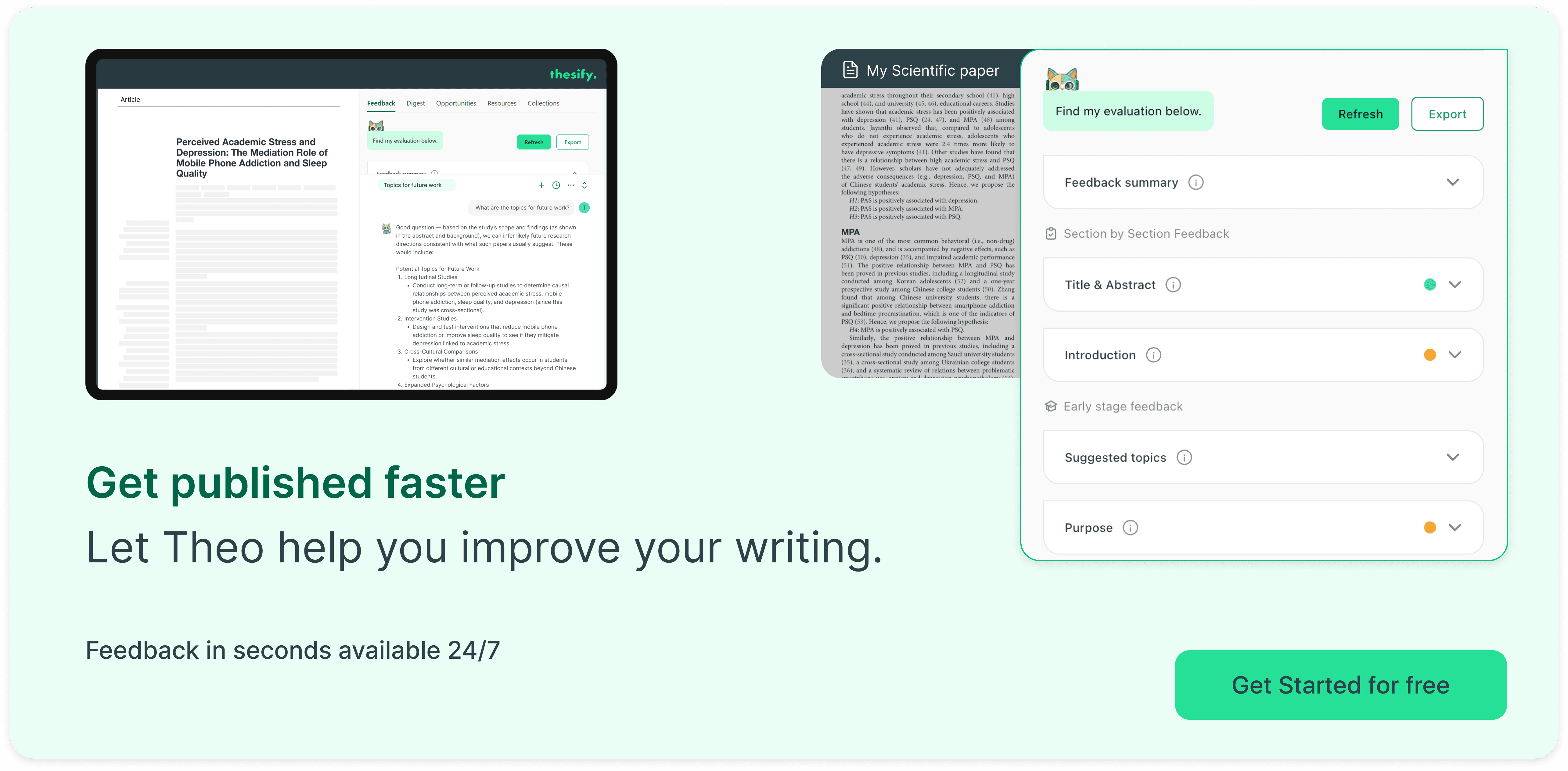
If your course uses no-AI assessments, students still need legitimate support for drafting and revision within the rules you set. thesify provides structured feedback on academic writing so students can improve clarity and argumentation without generating the assignment for them.
Related Posts
Rethinking Graduate Assignments: AI‑Inclusive Alternatives: The urge to ban AI often stems from concerns about plagiarism and cognitive offloading. However, generative models can already produce fluent responses that evade detection, and new models emerge faster than detection tools can keep up. High‑risk assignments, such as take‑home essays and problem sets, are easily handled by AI. Learn how to design graduate‑level assignments that embrace AI responsibly. Explore AI audits, literature mapping, oral defences and reflective tasks.
Integrating AI in Higher Education: A Professor's Guide for 2025: Becoming proficient in generative AI is not optional for university educators in 2025—it is fundamental. Professors who master AI literacy today are positioned to provide meaningful, informed guidance to their students tomorrow. A new HEPI survey finds 92% of students use AI tools, upending traditional teaching. Learn how higher education is adapting: from updated AI policies and academic integrity concerns to the push for AI literacy and better support for students, this report offers insights for faculty and institutions.
Preserving Your Academic Voice in the AI Era: More and more students are turning to generative AI to help them with writing assignments. But with that convenience comes a cost: the erosion of academic voice. Instead of developing personal analysis and critical arguments, students risk submitting polished, generic text that says very little about their own thinking. Discover how to preserve your academic voice while using AI writing tools. Professor Michael Muse shares insights on meditation, close reading and ethical AI use.