Ethical AI Writing Tools in 2026: A Risk-Based Comparison


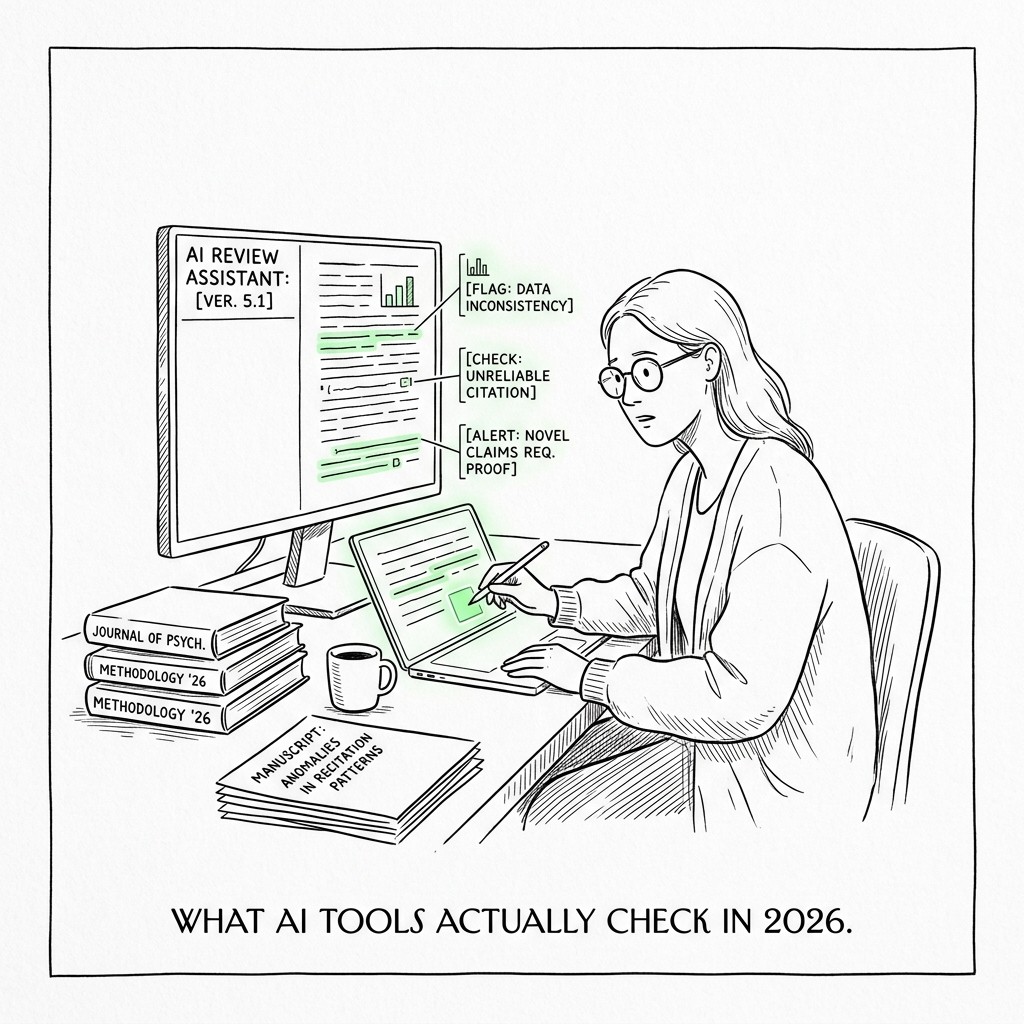
Ethical AI tools for academic writing support a defined research task while keeping the researcher’s contribution visible. Some tools in this comparison align with that standard more closely than others. This guide compares 10 named tools by authorship risk, data handling, verification burden, and fit for unpublished research drafts.
No tool is automatically ethical or institutionally approved. Risk depends on the feature you use, the material you upload, the provider’s data terms, and the rules of your journal, funder, or research organization.
How This Comparison Assesses Ethical Risk
Our article compares AI tools by the risks created by their features, not by marketing claims. This comparison examines how each tool’s typical features affect researcher control, authorship clarity, verification burden, and the handling of unpublished work.
The lower-, moderate-, and higher-risk categories describe the use identified in this guide. They do not constitute blanket approval or rejection of the product or every feature it offers.
For a broader framework covering privacy, source traceability, reproducibility, and verification, see our academic-grade AI tool criteria.
Review Your Draft Ethically
thesify Reviewer gives structured feedback on the manuscript you wrote, helping you check contribution framing, methods, evidence support, section alignment, and reviewer-facing risks without handing authorship to AI. Use it before submission to keep revision researcher-led and easier to document.
Review Your Draft Before Submission
Quick Comparison: Ethical Risk by Tool
The profiles below describe typical academic-writing use. They are not approvals. Account type, settings, institutional contracts, and publication rules can change the assessment.
Tool | Lowest-risk use | Overall profile | Data/privacy note | Generation risk |
Pre-submission evaluation of an existing manuscript | Lower risk | Uploaded documents are not used for model training and remain stored until the project or account is deleted. | Low | |
Collaborative drafting with visible human and AI contribution tracking | Low | Uploaded content is not used for model training. Human and AI contributions are attributed within the shared workspace. | Lower to moderate | |
Methods and reporting checks | Lower risk | Submissions are encrypted and quickly purged; only the resulting report remains in the account. | Low | |
Scientific image-integrity screening before submission | Lower risk | Screening runs on secure, private servers, and manuscript data is not reused for model training. | Low | |
Sentence-level academic language feedback | Lower to moderate | Writefull does not store or train on user text. Some third-party rewriting features may temporarily retain submitted text. | Low to moderate | |
Language editing, AI Review, and submission checks | Moderate | Paperpal states that user data and documents are not used to train its AI models. | Moderate | |
Translation and sentence-level language revision | Moderate | DeepL states that Pro text is not stored or used for model training without consent. | Moderate | |
Sentence-level grammar and clarity corrections | Moderate | Product Improvement and Training is enabled by default for individual accounts but can be turned off. Organizational defaults vary by plan. | Moderate | |
Short passages compared with the original line by line | Higher risk | Paraphrase, Academic, and Humanize modes can substantially rewrite text and make authorship boundaries less visible. | High | |
Non-confidential idea testing, question refinement, and outline testing | Higher risk | Individual-service content may be used for training unless the user opts out. Business, Enterprise, Edu, and API data are not used for training by default. | High |
Lower-Risk AI Tools That Preserve Researcher Control
These ethical AI tools support researcher-authored work through evaluation, contribution tracking, or reporting checks. They do not primarily depend on generating substantial replacement text, which makes their role easier to review and explain.
Tool | Why it made the list, best use, and risk to check |
Ethical strength: Evaluates an existing draft for contribution framing, argument clarity, methodology, structure, evidence support, and reviewer-facing weaknesses rather than generating a replacement manuscript. Uploaded documents are not shared or used for other purposes and remain stored until the user deletes the project or account. Best use: Pre-submission review of a researcher-authored manuscript, conference paper, or research report. Risk to check: Confirm that external processing is permitted before uploading confidential, embargoed, proprietary, or participant-sensitive material. | |
Ethical strength: Coauthor attributes text and edits to researchers or AI tools, allowing research teams to see who contributed what before submission. Best use: Collaborative drafting and revision when co-authors need a visible record of human and AI-supported contributions. Risk to check: Coauthor can draft text and propose revisions. Authors must still verify, approve, and disclose substantive AI assistance where required. For a fuller team workflow, see how to review AI contributions before submission. | |
Ethical strength: Produces bounded methods and reporting checks using NIH rigor criteria and reporting frameworks such as MDAR, ARRIVE, and CONSORT. SciScore states that submissions are encrypted and quickly purged. Best use: Life-science manuscripts that need checks for reporting completeness, rigor criteria, and research-resource identification. Risk to check: Automated text analysis can produce false positives and false negatives. A SciScore report cannot determine whether the study design or methodological decisions are scientifically defensible. | |
Why it made the list: Screens manuscript images for suspected duplication, manipulation, AI-generated content, and image plagiarism. Proofig states that screening takes place on private servers and manuscript data is not reused for model training. Best use: Image-heavy scientific manuscripts that need an integrity check before submission. Risk to check: A flagged similarity is not proof of fabrication or misconduct. Researchers must inspect the underlying images, investigate each result, and decide whether corrective action is needed. |
Moderate-Risk Tools for Language Editing and Translation
Language tools present a lower risk when they correct sentence-level errors in researcher-authored text. Risk increases when the same platform paraphrases passages, generates new content, suggests citations, or changes technical meaning.
Tool | Why it made the list, best use, and risk to check |
Why it made the list: Writefull provides language feedback designed for research writing. It states that text processed by its proprietary models is not stored or used to train its AI. Best use: Sentence-level copyediting of a technically complete draft, particularly for researchers writing in an additional language. Risk to check: Paraphrasing, summarization, “Make scientific,” and other features may use third-party AI services that temporarily retain submitted text. These features can also change substantive meaning. | |
Why it made the list: Paperpal combines academic language editing with manuscript review, reference checks, and submission-readiness checks. It states that documents processed on the platform are not used to train its AI models. Best use: Language revision and submission checks after the argument, evidence, and structure are stable. Risk to check: Rewriting, drafting, and citation-related features can introduce new wording or information. Verify changes against the original meaning and check the storage and deletion terms for the specific feature used. | |
Why it made the list: DeepL Pro supports translation, grammar correction, phrasing, style, and tone adjustments. Paid-account text is not stored or used for model training without consent. Best use: Translation and sentence-level revision through an approved Pro or institutional account. Risk to check: Fluent translation can alter methodological nuance, causal language, uncertainty, or field-specific terminology. Compare the revised version closely with the intended meaning. | |
Why it made the list: Grammarly separates grammar, punctuation, and clarity suggestions from optional generative drafting and rewriting features. It states that third-party service providers cannot train their models on user content. Best use: Sentence-level proofreading that preserves the researcher’s intended claim. Risk to check: Product Improvement and Training is enabled by default for individual Free, Premium, and single-user Pro accounts. Researchers should review this setting and limit generative features before processing unpublished work. |
Higher-Risk Tools for Paraphrasing and Text Generation
These tools are not inherently unethical. Their generative and rewriting features create greater authorship, verification, privacy, and disclosure burdens than bounded editing or evaluation tools.
Tool | Why the risk is higher, safest fit, and what to check |
Why the risk is higher: QuillBot can rewrite sentences, paragraphs, reports, and articles. Its Paraphraser includes Academic, Expand, Shorten, Creative, and Humanize modes, while its AI Humanizer is designed to rewrite AI-generated text so that it sounds more human. Substantial rewriting can change meaning and make the boundary between researcher-authored and AI-revised language less clear. Safest fit: Short, non-confidential passages where the researcher compares the output with the original line by line and can report the intervention accurately. Check or avoid: Do not use the Humanizer to conceal AI-generated writing or rewrite large manuscript sections without author review. QuillBot itself advises users to follow institutional rules and acknowledge AI assistance. Verify current data-handling terms before submitting unpublished material. | |
Why the risk is higher: ChatGPT can draft, rewrite, summarize, translate, and restructure text. This flexibility can introduce language, claims, interpretations, or reasoning that the researcher did not originate and must independently verify. Safest fit: Non-confidential brainstorming, question refinement, outline testing, or administrative drafting that does not contain unpublished findings, participant information, confidential peer-review material, or proprietary text. Privacy distinction: In personal Free, Plus, and Pro workspaces, data sharing for model improvement is enabled by default, although users can turn it off under Data Controls. OpenAI states that ChatGPT Business, Enterprise, Edu, and API inputs and outputs are not used for training by default. Check or avoid: Do not upload sensitive research material unless the specific account, institutional agreement, and project rules permit it. Every retained claim, citation, and interpretation requires human verification. |
Features That Increase Authorship and Verification Risk
The risk is higher when a tool:
generates substantial new text rather than evaluating researcher-authored material
rewrites large passages or uses Humanizer features that make authorship boundaries less visible
introduces claims, citations, or interpretations that the researcher cannot verify and defend
These features do not make a tool automatically inappropriate, but they require closer author review and clearer disclosure.
Before Using AI on Unpublished Research
The tools in this comparison are not approved for every type of research material. Before uploading confidential, identifiable, embargoed, proprietary, or patent-sensitive content, check the current provider terms and the requirements governing the project.
For journal requirements concerning disclosure, authorship, figures, and peer-review confidentiality, review AI policies in academic publishing.
Frequently Asked Questions About Ethical AI Tools for Academic Writing
What is the most ethical AI tool for academic writing?
There is no single tool that is ethical in every context. For an existing manuscript, evaluative tools such as thesify Reviewer and methods-focused tools such as SciScore generally create clearer authorship boundaries than tools that generate or extensively rewrite text. The appropriate choice still depends on the task, material, account type, and applicable research or publication rules.
Why do evaluative tools generally present a lower authorship risk?
Evaluative tools comment on researcher-authored work rather than producing substantial replacement text. Their recommendations still require verification, but it is usually easier to distinguish the researchers’ intellectual contribution from the tool’s diagnostic feedback.
Are grammar and language-editing tools ethical for researchers?
Sentence-level grammar, spelling, punctuation, and clarity corrections generally create less authorship ambiguity than paragraph rewriting or long-form generation. The risk increases when a tool paraphrases substantial passages, generates abstracts, or changes technical meaning. Researchers should review each retained change and check whether substantive assistance must be disclosed.
Is ChatGPT ethical for academic writing?
ChatGPT can support bounded and approved tasks, but generative writing creates greater authorship and verification demands than proofreading or diagnostic feedback. Researchers remain responsible for checking every retained claim, citation, interpretation, and wording change. Confidential or sensitive research material should only be processed in an environment approved for that material.
Do researchers need to disclose AI writing tools?
Disclosure requirements depend on the tool, feature, journal, publisher, and research organization. Some policies distinguish basic spelling or grammar correction from generative assistance. Check the target journal’s current instructions and review AI policies in academic publishing before submission.
Choose AI Tools That Preserve Researcher Control
An academic label does not make a tool appropriate for every task. The strongest options in this comparison support a defined function, keep their contribution visible, and leave the argument, evidence, and final decisions with the researchers.
For unpublished work, the best choice is a tool whose role, data terms, and limitations you can explain clearly to co-authors, supervisors, editors, or funders.
Related Articles
How to Choose Academic-Grade AI Tools for Research: Get a definition of what an “academic” AI tool means and a clear criteria framework. We go beyond integrity and AI tools by synthesizing institutional rubrics and journal policies (e.g., data privacy, reproducibility, accountability). Read our rigorous evaluation guide written by researchers passionate about ethical AI tools.
AI Policies in Academic Publishing 2026: Learn more about the 2026 landscape of academic publishing, including the transition from reactionary policies to structural enforcement and integration of AI. Compare 2026 journal AI policies, including disclosure rules, image restrictions, peer review confidentiality, and pre-submission checks for research teams.
How to Review AI Contributions in a Co-Authored Manuscript: The contemporary ecosystem of academic publishing demands unprecedented levels of transparency, particularly as multi-site research teams increasingly integrate artificial intelligence into their collaborative workflows. See how to review AI-supported contributions in a co-authored manuscript, using Coauthor attribution signals to check claims, edits and disclosure needs.